2008年3月16日星期日

Medical Devices and Limulus Amebocyte Lysate (LAL) Testing

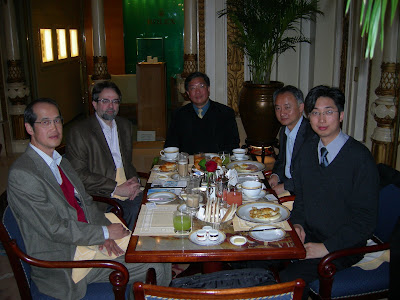
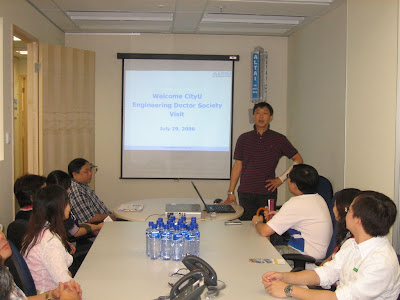
The HKIE seminar about LAL testing presented by Ms. Laurie Fife on 13 March 2008 from 4:00pm to 6:00pm in Hong Kong Productivity Council. I would like to summarize and search more information about this topic as follows:

She demonstrates the testing kid to us during the seminar.


Finally, a positive result was obtained.

Introduction:
Pyrogen:
The pyrogen will cause the elevated body temperature (i.e. fever). Pyrogens are usually bacterial products and remains or decaying products of the bacterial cell walls. Even in minimum dose, these substances induce elevated body temperature when injected into humans and animals. Pyrogens are usually high-molecular-weight substances of polymerous nature, like lipopolysacharids. Pyrogens could be either microbial or non-microbial.

Endotoxin:
Endotoxins are high-molecular-weight complexes associated with the outer membrane of gram-negative bacteria (GNB). They are the most usual cause of the elevated body temperature, induced by contaminated drug products. Their pyrogenic activity is higher than that of other pyrogenic substances. It could be said that the absence of such bacterial endotoxins in a drug implies the absence of pyrogenic components in examined drug in general. Endotoxins are similar to lipopolysacharids, they are heat stable and can survive the sterilisation process. In their molecular structure, endotoxins contain lipid A which is responsible for the endotoxic activity of the endotoxins. The free form of lipid A, extracted from endotoxins by acid hydrolysis, has almost the same spectrum of biological activities as the endotoxin itself.

Lipopolysaccharide (LPS):
LPS is a major component of the outer membrane of Gram-negative bacteria, contributing greatly to the structural integrity of the bacteria, and protecting the membrane from certain kinds of chemical attack. LPS is an endotoxin, and induces a strong response from normal animal immune systems.


Fever is a rise in our body's normal temperature, which, on average, is 98.6 degrees Farenheit. Our blood and lymphatic systems produce white blood cells which are what fight off infection. As our white blood cells increase in number, like an army to fight the germs, they go faster and faster attacking the germs, this causes our bodies to heat up, thus causing the fever or rise in body temperature. The hypothalamus in the brain, which is the body's heat regulating mechanism is affected by the pyrogens, or the white blood cells that are produced to fight the infection.

Why Limulus Amebocyte Lysate (LAL) testing?
Rabbit Pyrogen Test
1920’s Seibert proved fevers from IV products were induced by heat-stable, filterable substances called “pyrogens” and then he chose the rabbit as the animal model. But Rabbits test may cause false positives. Moreover, it needs to inject three rabbits per test.

Limulus Amebocyte Lysate (LAL) testing is including:
• Gel Clot
• Endpoint Chromogenic
• Automated assays
– Turbidimetric
– Chromogenic
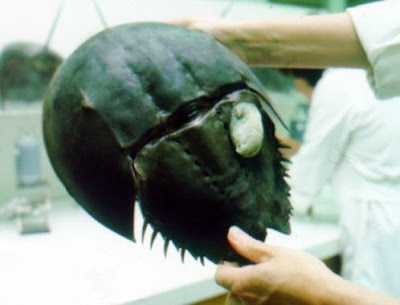
Limulus polyphemus—the American Horseshoe Crab was employed. The cardiac membrane is disinfected with a sterile alcohol wipe. A sterile needle is gently inserted and the blood begins to flow. Bleeding takes seconds and the needle is removed as the flow of blood slows. Clotting takes place at the point of needle insertion.
Host Defense Mechanism:
. Granules contain clotting factor / enzymes.
. The crab can survive having most of its blood clot.
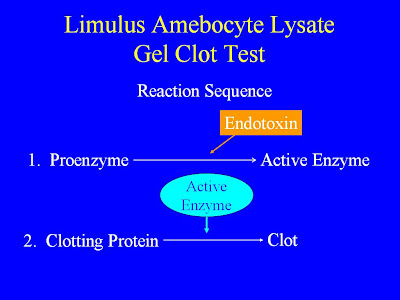
. Gram-negative bacteria or endotoxin causes blood cells (amebocytes) to release proteins into the plasma (hemolymph) causing the blood to coagulate.
. Coagulation kills bacteria and neutralizes endotoxin.

LAL Chromogenic Test


LAL Turbidimetric Test


Manufacture of LAL
. Collect animals
. Extract blood
. Centrifuge blood
. Wash cell
. Lyse cell
. Extract proteins


Conclusion:
1977 FDA approved LAL test for release of medical devices
Most devices are very straightforward
- Water rinses
- No interference
- Endotoxin recovered form challenge
Treatments to Overcome Inhibition/Enhancement
• Dilution
• pH Adjustment
• Heating
• Surfactant/Dispersing Agent
• Cellulase or Glucan Blockers
• Divalent Cation addition
• Ultrafiltration

2008年3月13日星期四

Biological Waste Management

The public lecture entitled “Biological Waste Management – Anaerobic Digestion, Composting and Vermicomposting” presented by Professor Eliot Epstein on 11 March 2008 at 6:30am in Hong Kong Baptist University.

He introduces 3 types of biodegradable methodology for waste management and analysis the advantage and disadvantage in each method.

Anaerobic digestion is a process in which microorganisms break down biodegradable material in the absence of oxygen. The process is widely used to treat wastewater sludges and organic wastes because it provides volume and mass reduction of the input material.


Composting is the aerobic decomposition of biodegradable organic matter, producing compost. The decomposition is performed primarily by facultative and obligate aerobic bacteria, yeasts and fungi, helped in the cooler initial and ending phases by a number of larger organisms, such as ils, and other families representing ants, nematodes and oligochaete worms.
Vermicompost (also called worm compost, vermicast, worm castings, worm humus or worm manure) is the end-product of the breakdown of organic matter by some species of earthworm. Vermicompost is a nutrient-rich, natural fertilizer and soil conditioner. The process of producing vermicompost is called vermicomposting .

Conclusion:
He does not believe that any one technology should be used by HK to solve the solid waste problem. But he believe the potential solutions are:
i) initiating an aggressive recycling program;
ii) using composting to recycle food waste from markets;
iii) considering anaerobic digestion and waste to energy before considering incineration;
iv) No consider and waste money on vermiculture.

2008年3月10日星期一

Three Quality Gurus have long life

Recently, Juran has passed away at 103 years old. He is the longest life among quality gurus.
Eventhough it is no scientific evidence about life and studying of quality, the following 3 quality professionals are comparative long live.

Dr. W. Edwards Deming is known as the father of the Japanese post-war industrial revival and was regarded by many as the leading quality guru in the United States. He passed away on December 20, 1993 at the age of 93.

Philip B. Crosby, who championed the zero-defects concept and preached that “quality is free,” has 75, passed away on August 18, 2001.

Dr. Joseph M. Juran, noted author and "father" of modern day Quality Management, passed away on February 28, 2008, from natural causes. He was 103 years old, and was physically and mentally active until his death

2008年3月4日星期二

Learn Team Building through Samba

This paper discusses the team building through Samba dancing for departmental talent show in annual dinner. When we received the mission to perform a dancing show which represented our department, we have a very clear team goal and target.

Goal and Target:
It remains three week for us to practice the Samba. In the beginning, the practice schedule is planned to be practice two day per week in lunch hour. We have planned 4 pair for Samba and Drum player sole. Time is tight and participants are not enough.

Individual Resource:
One of our colleagues is familiar with Samba and she works as our dancing teacher. Another colleague who is familiar with music and drum player; and he prepares the background music. After that we need to recruit 7 colleagues as dancers. Initially, there are only 2 girls and 2 boys to join the practice but it is only half participants in our target. Under no circumstance, some colleagues are encouraged and forced to join.

Encourage Team Members to Develop Skills:
The first lesson, we have learned the basic step of Samba. At that time, every participant have practice the same posture and motion. We listen to the beat and rhythm. However, some people come late, no show or can’t achieve the progress. During the dancing pair matching, our teacher selected at least one of partner with good sense of rhythm that can help the whole performance. Our dancing teacher works as team leader to motivate every one when we achieve a certain level. Some team member joined us late (e.g. after 3 lesson). Team leader is coaching them individually and assigns one of the best team members to lead the others to practice. When there is only a week before annual dinner, all dancing team members request to practice more times spontaneously. The commitment is more obviously.

Communication and Involvement:
We have a communication platform to update all department members about our practice progress and encourage others to join us. We show the whole arrangement of dancing show to all staff in the department. The sequence of the show is 1) Samba by 4 dancing pairs; 2) Sole of Drum player & dancer and 3) all people to join the dance of “Macarena”. Two days before annual dinner, we have up to 30 colleagues to join the “Macarena” practice. It is very high team spirit at the time. Finally, we have a good show in annual dinner and all audience is appreciated.

Conclusion:
Team building is not only one super dancer in the show but it needs every team member involvement and whose understand the Samba steps, rhythm, concentration, matching and respect with partner. In here, drumming is a great way to break down barriers, create common environment and teach people the value of listening and learning together as a team. Leader needs encouraging individuals to work with others towards a common goal. During this Samba dancing, we learn the following key points about effectiveness of team:
1) Clear objectives: Talent Show in annual dinner
2) All team members have opportunities to contribute to objective setting
3) Support for each other during practice
4) Regular review of team performance for learning rather than blaming
5) Good communication
6) Sufficient time for planning
7) There is a broad mix of skills (dancing & drumming) and personal attributes.
After the show, every team members are satisfied their performance and rewarded by learning Samba.


2008年3月2日星期日

Roberto Saco, ASQ President - Elect, Visiting HK

Mr. Roberto Saco visited Hong Kong and he had exchanged ideas with the leadership of HKSQ at 8:00 AM for a breakfast meeting in Peninsula Hotel on 26th Feb 2008.

HKSQ participants: Dr. Albert Tsang, Dr. K.S. Chin, Dr. Aaron Tong and Ir. Lotto Lai.

We learned a lot about Roberto's views on ASQ's future directions and the current quality management practices in the US. ASQ's outreach programs and development of collaborative relationships with overseas organizations would enhance the ASQ brand and the Society's contribution to enabling achievement of performance excellence in organizations around the world.

2008年2月23日星期六

RFID Technology & Application

Radio Frequency Identification (RFID) is a kind of technology using radio waves to identify individual items without physical contact automatically. A typical RFID system contains 3 basic components: Reader, Antenna and Tag.

Barcode is the most common technology which employed for identification. But RFID is more advance in identification down to individual items. The following is comparison of RFID and Barcode.


The information shared is come form the following seminar which organised by Hong Kong Society for Quality (HKSQ) on 23rd Feb 2008.


The history of RFID development:


Some application example are shown as follows:
In Hong Kong Jockey Club, RFID is used for tracing the position of horses during race.


Some manufacturers are using RFID to trace their product during production.

For asset management, the hi-tech equipment is traced in different production line and location.


Warehouse management is also popular to employ RFID.


Hong Kong Polytechnic University had obtained patients for RFID deployment.


The chairman of HKSQ (Dr. Albert Tsang) presents souvenir to the specker (Dr. S.K. Kwok).


Then, we visit the laboratory and observe some real products.


2008年2月1日星期五

Service Quality

Customer requirement and expectation is a dynamic function, implying that the status of product quality is accepted in a certain time but it does not mean it will be always accepted by customer in the future. So we need continual improvement of the product quality. When societies become wealth, people do not satisfy only on the product but also on the experience of service. Under this situation, the quality of service becomes more and more important. The most famous Service Quality model is a GAP model which was proposed by Parasuraman (1985). Another scholar (Liu, 2002) combined ISO9001 requirement into GAP model is shown as follows.

The various gaps visualized in the model are:
Gap 1: Difference between consumers' expectation and management's perceptions of those expectations, i.e. not knowing what consumers expect.
ISO 9001: 5.2 – Customer focus; 7.2 – Customer-related process

Gap 2: Difference between management's perceptions of consumer's expectations and service quality specifications, i.e. improper service-quality standards.
ISO 9001: 6 – Resource management; 7.1 – Planning of product realization; 7.3 – Design and development

Gap 3: Difference between service quality specifications and service actually delivered i.e. the service performance gap.
ISO 9001: 7.5 – Product and service provision; 8.2 – Monitoring and measurement

Gap 4: Difference between service delivery and the communications to consumers about service delivery, i.e. whether promises match delivery?
ISO 9001: 5.1 – Management commitment; 5.3 – Quality policy; 5.4 - Planning

Gap 5: Difference between consumer's expectation and perceived service. This gap depends on size and direction of the four gaps associated with the delivery of service quality on the marketer's side.
ISO 9001: 8.2.1 – Customer satisfaction; 8.2.4 – Monitoring and measurement of product; 8.5 - Improvement

One of quality principle is to exceed customer expectation. It is very difficult to achieve. However, a book written by Christian entitled “If God is your customer” (in Chinese) shows how you exceed customer expectation. Another book written by MaBelle people entitled “MaBelle is Different” (in Chinese) indicates how MaBelle staff serves their customer. In MaBelle case, they use IT to create value-added services, as well as, their enthusiastic for assisting their customer. It demonstrates that good service quality comes from the heart of service provider (Customer Care!).


Reference:
Parasuraman, A., Zeithaml, V.A. and Berry, L.L. (1985), “A conceptual model of service quality and its implications for future research”, Journal of Marketing, Vol.49, No.3, pp. 41-50.

廖仁傑 (2002) “結合ISO 9001:2000 與 PZB Gap Model 之「顧客滿意」改善方式”, 38th Annual Conference of CSQ & 8th NQMS

MaBelle 人 (2007) “MaBelle is Different”, 樂文出版社有限公司.

2008年1月12日星期六

Introduction of Engineer Doctorate (Engineering Management) in CityU

The Engineering Doctorate (EngD) is a professional doctorate degree. The Engineering Doctorate program at MEEM of CityU is focused on Engineering Management. It is a part-time program designed for senior managers and engineers in all sorts of Hong Kong/China organizations.

EngD develops individuals who can learn and implement innovation meeting strategic needs of industry. Comparison with PhD, PhD need "Discovery" and EngD need "Innovation".

During this study, we can communicate with different industrialists, engineering managers and scientists. The following photos are shared our life.

Photo with Dr. Liza Wang and Prof. HSU, M., Stephen during EngD's New Year Party in Cyber port on 31 Dec 2007.


Study & Lunch with ASM Chairman "Dr. Partick Lam" in 2006.

Visit Classmate's Company in HKSTP in 2006

Photo taken in HKSTP IC Development Support Centre (Probe & Test Centre)

2007年12月28日星期五

Quality DIY

Quality has different definitions such as "Degree to which a set of inherent characteristic fulfills requirements" (ISO 9000), "Conformance to requirements" (Philip B. Crosby), "Fitness for use" (Joseph M. Juran), "Quality and the Required Style of Management" (W. Edwards Deming), etc. The most popular Quality Management System is ISO 9001:2000 which has been employed in different type and scale companies. In the past, quality consultancy firm almost must be employed to assist a factory to achieve ISO 9001 certification. However, it is no longer to be the term “must”. It is not only appearing in ISO 9001 certification, but also appearing in other management system (e.g. ISO 14001, OHSAS 18000, SA 8000, ISO 27001, etc.) and quality improvement (e.g. 6 sigma, lean, 5S, etc.).

Recently, quality manager would be employed with multidiscipline requirements to handle most of all management systems. It is observed the concept of DIY is a trend for developing quality management. Do it yourself (DIY) is a term that focus on people creating things from themselves without the aid of paid professionals. In terms of Quality, company would like to use the exist manpower to create a quality management system or other quality improvement programs from themselves without the aid of paid quality professionals. It is because of the top management considering the return of investment (ROI) in short term. However, Quality DIY can be executed with some critical criteria. That is people worked in the company having a learning culture, in which solution generation by themselves is encouraged.

Quality DIY means everybody does the quality by himself. How to do it right? Quality DIY needs Quality DIY Instructor (or trainer). So a training zone said “Quality Improvement Center” should be established in the company for all staff. Quality DIY down to individual is “Discipline”. The best tool to train up individual discipline is 5S. The 5S's are: i) Seiri (常組織) Sorting; ii) Seiton (常整頓) Simplifying; iii) Seisō (常清潔) Systematic Cleaning, or Shining; iv) Seiketsu (常規範) Standardizing; and v) Shitsuke (常自律) Sustaining. Moreover, the Quality DIY Culture is to think globally and act locally to achieve quality excellence.

2007年12月22日星期六

Certificate Course on Quality Management for Laboratory

Background of the course established:
In 2005, I (the course leader) observed that many CityU graduates from chemistry and biology dept had no idea about quality management employed in laboratory. In order to increase their successful employment in the field of laboratory, Dr. Richard Cheung, Dr. Micheal Lam and I developed this program cooperation with Hong Kong Society for Quality (HKSQ). There are free for 15 students and cost only 10 members/non-members of HKSQ for cost balance.

I am also a graduate in 1992, 1994 & 1997. That is a good time to contribute my knowledge and experience to CityU junior classmates.

Objectives of the certificate course:
This certificate course is designed to introduce contemporary concepts and knowledge in quality management, measurement, calibration and audit practice of a laboratory.

Course Content:


For more details, please visit
http://www.hksq.org/HKSQ_CLabQS_20080124.pdf

2007年12月9日星期日

Leadership DNA

What is Leadership DNA?

My definition is that the characteristic of leader is similar to the characteristic of DNA (Deoxyribonucleic acid) which a double-stranded molecule held together by weak hydrogen bonds between base pairs of nucleotides. The double-stranded molecule indicates “Direction” and “Decision”. Weak hydrogen bonds mean interaction between different elements of leadership.

There are four nucleotides in DNA. Each nucleotide contains a base: adenine (A), guanine (G), cytosine (C), or thymine (T). Base pairs form naturally only between A and T and between G and C so the base sequence of each single strand of DNA can be simply deduced from that of its partner strand.

In terms of Leadership, (A) means Aggressive, (G) means Gentle, (C) means Confidence and (T) means Trust. Different combination have different outcome and finally it affect the “Direction” and “Decision”.

Therefore, Leadership DNA means the interaction of A, G, C & T to give Direction and Decision; and DNA’s double helix structure implies continual improvement.

About “領袖才幹 DNA” 講座
I would like to summarize the seminar entitled“領袖才幹 DNA” which held on 7th Dec 2007 in HKSTP. The speakers are Mr. Wong (黃謙) and Mr. Tao (陶傑).

黃謙 said:
VCD – “Values”, “Common Sense / Commitment” & “Determination”
DVD – “Direction”, “Vitality” & “Delegation”
“中式” 之領導有 “方”
方向 (Direction)
方寸 “分寸” (4 Right: Right Thing, Right People, Right Place & Right Time)
方法 (Methodology)
方式 (Approach)
方程式 (Formula)

陶傑 said:
有胸襟, 有判斷力.
領袖要像水, 在不同溶器有不同形象, 但本質不變.
H2O – “二份胸襟, 一份判斷”

強幹弱枝 vs 弱幹強枝
實幹虛枝 vs 虛幹實枝
(Micro-Management vs Macro-Management)

疑人勿用, 用人勿疑?

2007年12月5日星期三

Bio-Quality Management System (Bio-QMS)

What is Bio-QMS?
A management system direct and control an organization by policy and objective with regard to bio-quality. Bio-quality is the degree to which a set of inherent properties of a product, system or process fulfills biotechnology related requirements including bio-risk, bio-safety and bio-security. For biotechnology related product, system or process, it has almost operated in laboratory environment such as biochemistry test, microbiological / culture study, DNA & RNA recombination, GMO study, etc.

Bio-risk is the probability of an adverse health effect as a result of exposure to a biohazard substance. The risk involves interactions among agent, host and environment. Therefore, a systematic process for the assessment, control, communication and review of risks to the quality of the drug (medicinal) product across the product life cycle and safety, as well as, security should be concerned.

Laboratory Bio-safety could be interpreted as containment principles, technologies and practices to prevent unintentional exposure to pathogens and toxins, or their accidental release.

Laboratory Bio-security could be interpreted as institutional and personal security measures designed to prevent loss, theft, misuse, diversion or intentional release of pathogens and toxins. Laboratory Bio-security touches many area including physical security, personnel security, material control & accountability, transport security and information security.

Therefore, Bio-QMS is an integrated management system to ensure safe handling and free contamination risk of micro-organisms and the products of biological processes through the establishment and implementation of the policies on bio-quality (bio-risk, bio-safety and bio-security).

The followings photos show a simulation handling process of bio-agent spill in BSL3 lab.


LinkWithin

Related Posts with Thumbnails