2014年9月21日星期日

CityU EngD (EM) Gathering Talk – Innovative Entrepreneurship & 3D Printing

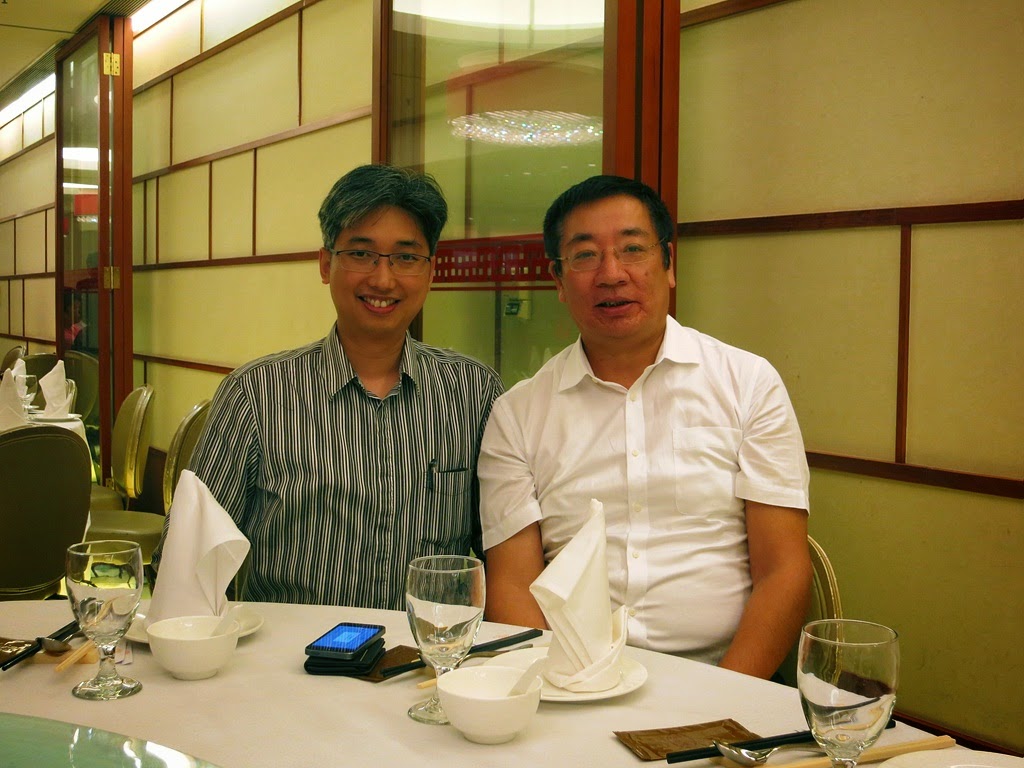
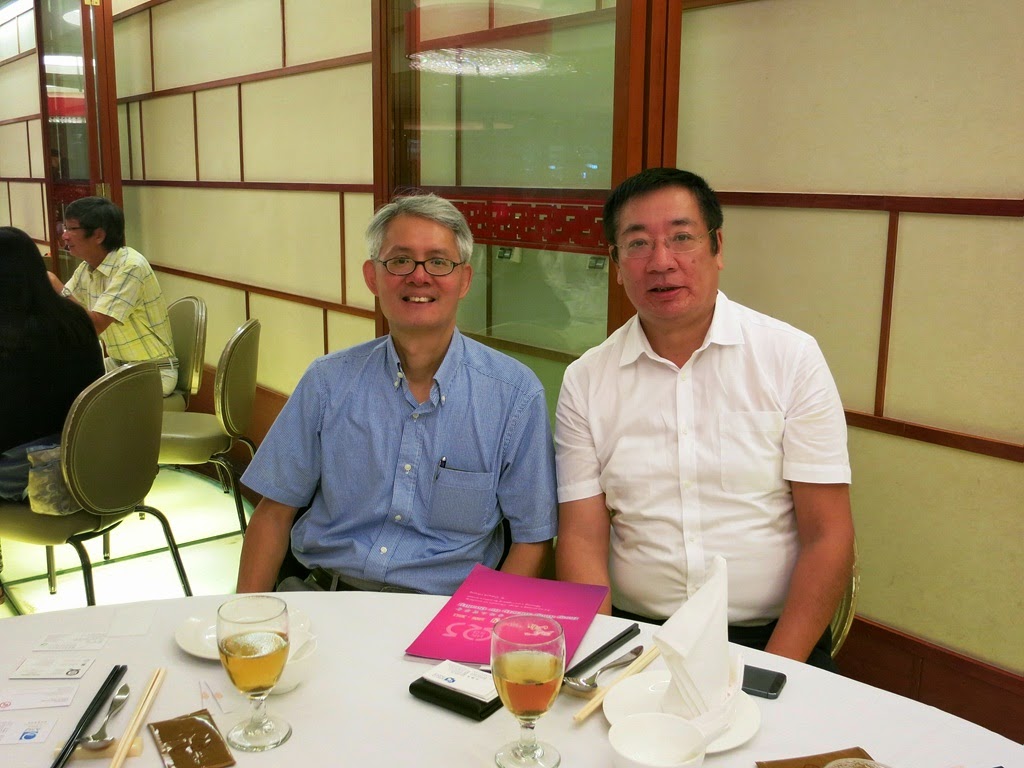
Engineering Doctorate EngD (EM) Society organized a talk on 20 Sep 2014 (Saturday night) at Alumni Function Room in 11/F., AC3, CityU. We are honor to invite Dr. SUN Hongyi (Associate Professor, SEEM Dept., CityU) to present his recently research project granted HK$1.35 Million entitled “Professional Development Platform for Innovation and Entrepreneurship” and I was honor to share 3D Printing in Science Parks.

In the beginning, we introduced ourselves to each other and shared EngD study life. Dr. Rocky Lam briefed the aims of this gathering talk to communicate and connect EngD cohorts for exchanging expertise and creating business opportunities.


Dr. Sun was the first guest speaker and his introduced the CityU education Platform for Innovation and Entrepreneurship (CePIE) which was a platform for online course to link up Government, Industry and University. It also like supermarket for sharing and trading IP, technology, products, solutions and training. It was supported by UGC and CityU with the funding HK$1.35 Million.

Then Dr. Sun demonstrated the platform at http://www.cityu.edu.hk/CePIE/ and he invited us to join the Industrial Mentor.


After that he mentioned his trademarked Innovation course named “3333”. The first 3 means “Creativity, Innovation and Entrepreneurship”. The second 3 means “New idea, product and business”. The third 3 means “Thinking, Participating and Going to Market”. The last 3 means “Capability of Learning, Adopting and Leading”.


I was the second speaker and my topic was “3D Printing in Science Park”. I briefed the history and technology of 3D Printing. The concept of 3D printing was able to trace back to 1892 US Patent named “Manufacture of Contour Relief Map”. However the first 3D printer was patented in late 1980s. In late 1992, SEEM (previous named MEEM) Dept. of CityU jointly with the Hong Kong Productivity Council (HKPC), a government subsidised agency, developed a technology transfer project on stereolithography (SLA) technology for rapid plastic prototype making (KS Chin, 1998).


Then I introduced five 3D printers which serviced in Science Park as follows:
1. Replicator 2X (Makerbot)
http://store.makerbot.com/replicator2
* Raw material is ABS filament, low cost 3D printer
2. Objet500 Connex3 (Stratasys)
http://www.stratasys.com/3d-printers/design-series/precision/objet500-connex3
* Raw material is resin, advanced multi-materials color 3D printer
3. ProJet660 Pro (3Dsystem)
http://www.3dsystems.com/3d-printers/professional/projet-660pro
* Raw material is powder, color 3D printer
4. Roland Modela ProII MDX-540
http://www.rolanddg.com/product/3d/3d/mdx-540/mdx-540.html
* Soft material used wood and plastic, Milling machine with 4 axis
5. Lumex Avance-25 (Matsuura)
http://www.matsuura.co.jp/english/contents/products/lumex.html
* Laser sintering and milling
* Raw material is metal powder


Finally, I shared some 3D Printing products which made by using ProJet660 Pro to EngD cohorts.


After that we discussed in different topics about EngD studying and future cooperation between industry and university.

Reference:
Engineering Doctorate (Engineering Management) - http://www.cityu.edu.hk/seem/pdf/EngD_Leaflet.pdf
CityU Engineering Doctorate Society - http://www.engd.org/
CityU education Platform for Innovation and Entrepreneurship (CePIE) - http://www.cityu.edu.hk/CePIE/
KS Chin (1998) “Implementation of Rapid Prototyping Technology — A Hong Kong manufacturing industry's perspective”, Int. J. Adv. Manuf. technol. Vol.14, pp570-579.


2014年9月19日星期五

Dinner with Mr. Fred Zhang (ASQ China)

We appreciated Mr. John Fowler (ASQ Global Managing Director) who introduced Mr. Fred Zhang (General Manager, ASQ China) by email on 18 Aug 2014. So we have a chance to arrange a dinner meeting with Mr. Fred Zhang on 19 Sep 2014. The meeting aims to share information and cooperation between Hong Kong Society for Quality (HKSQ) and ASQ-China in near future. We have also invited Prof. Kwok Tsui (Chair Professor and Head of SEEM Dept., CityU and Fellow of ASQ) to join us. There are only Five ASQ Fellows in Hong Kong and three of them (Prof. Kwok Tsui, Dr. KS Chin and Dr. Aaron Tong) joined our dinner tonight.

(Left: Dr. Aaron Tong, Dr. KS Chin, Prof. Kwok Tsui, Mr. Fred Zhang, Dr. Albert Tsang, Ms. Angela Wong, Ms. Minda Chiang, Dr. Lotto Lai and Mr. Simon Tong)


Ms. Angela Wong (Vice Chairman, HKSQ) presented our 25th anniversary year book to Mr. Fred Zhang.


Then we discussed the future cooperation issues. Mr. Fred Zhang said ASQ representative would attend Huawei Global Quality Forum as keynote speaker to introduce ASQ recent research “Culture of Quality” on 30th Oct at Huawei HQ Shenzhen, China. He suggested ASQ representative could stay one more day in Hong Kong on 1st Nov (Saturday) for 3 hour seminar and sharing. We all agreed and would support this arrangement once ASQ confirmed the speaker. Moreover, I also introduced Mr. Simon Tong (Coop member, HKSQ) to Fred and briefed his Innovation methodology training based on Mr. Darrell Mann. It could introduce to ASQ China. Moreover, Fred encouraged us to exchange more expert and different high level training to matching National Quality direction.


Prof. Kwok Tsui also took a photo with Mr. Fred Zhang for memory.


I remember that Dr. K.S. Chin and I had lunch with Mr. John Fowler to exchange idea for enhancing our cooperation and contribution to quality society on 28 Mar 2011. HKSQ is ASQ’s World Partner and always supports each other on promoting quality.


Reference:
20110328: Lunch with Mr. John Fowler (ASQ Global) - http://qualityalchemist.blogspot.hk/2011/03/lunch-with-mr-john-fowler-asq-global.html
HKSQ – http://www.hksq.org/
ASQ – http://asq.org/index.aspx
ASQ China – http://www.asq.com.cn/


2014年9月17日星期三

Dialogue with CityU President

"A Dialogue with the President" on CityU campus in the evening of 17 September (Wednesday) co-hosted by the Alumni Relations Office and the Convocation which aims to keep our alumni community abreast of the University development. Professor Way Kuo, CityU President and University Distinguished Professor, shared with you the recent achievements and developments of the University. On this special occasion, participants joined together to take part in the soft opening of the newly established Alumni Function Room.

Group photo of President, Professors and Convocation members


Mr. Joseph Tsoi (Vice-Chairman, Standing Committee of Convocation, CityU) represented alumni to ask some questions to Prof. Way Kuo including student exchanging program, university ranking, online free course named MOOC, and School of Veterinary Medicine, etc.


President told us several stories to answer those questions such as MIT’s research of internet, USA only 50% graduation rate, etc.


During discussion the School of Veterinary Medicine, President told us a story about receiving a donation when he under clinical inspection. It could be found in Way Kuo Blog - http://wikisites.cityu.edu.hk/sites/president/default.aspx. He encouraged us that no one could look us down after establishment of Vet School.


Q&A Session
I asked a question how to enhance the entrepreneurship training in CityU so as to increase innovation and commercialization in CityU. President said they were working on this direction and encouraged students to apply patent in their distinction project.


One of questions was about teaching language such as EMBA in Chinese. President told us Tsinghua University also used Chinese for their EMBA. He said language was important for communication but the most important was content/message. Once your country strong, everybody would use your language. He told another story about Taguchi training. No one (participant in USA) knew what his said (in Japanese) but everyone followed his method. He also joked that many people said Hong Kong student they didn’t speak in English. It was same as USA’s student. Why? It was because they didn’t communicate with each other! President’s colleague added EMBA was a platform. President another colleague answered how to enhance personal development. He replied that he would challenge student who didn’t take risk that was also answer my question about entrepreneurship. He also mentioned the mentorship and internship program for solving this program.

I took a photo with my teacher Prof. Paul Lam.


Dr. TW Liu and I represented EngD Society to support CityU’s activities. We also discussed President gave a keynote speech in the 1st China Quality Conference in Beijing on 15 Sep 2014.


Reference:
Alumni Relations Office - http://www.cityu.edu.hk/aro/main/
Convocation - http://convocation.cityu.edu.hk/home/index.php
CityU Engineering Doctorate Society - http://www.engd.org/
CityU President delivers keynote address at inaugural China Quality Conference - http://wikisites.cityu.edu.hk/sites/newscentre/en/Pages/201409161600.aspx


2014年9月15日星期一

Open Forum on Strengthening Hong Kong’s Economic Competitiveness

The Open Forum on Strengthening Hong Kong’s Economic Competitiveness through Technology Development was organized by Dashun Policy Research Centre and co-organized by ITC, HKSTPC, FHKI, HKEIA, ITJC, HKAAST, ASTRI, HKYIC, Invotech and AEPS on 15th Sep 2014 in Charles K. Kao Auditorium, Hong Kong Science Parks. Technology Development is the key to Hong Kong’s future economic capability and international competitiveness. It matches the national direction advocated by Premier Li Keqiang at the National People’s Congress 2014 and by the Chief Executive in his 2014 Policy Address regarding the setting up of the Innovation and Technology Bureau.

In the beginning of the forum, Dr. Raymond Ho Chung-tai, SBS, JP (Chairman, Dashun Policy Research Centre) gave a welcome remarks and he introduced the vision of Dashun Policy Research Centre to create a better Hong Kong for all. The centre founded on 12 May 2011 by a large group of professionals, experts and scholars of different disciplines to promote the long term interests and sustainable development of Hong Kong.


The Hon John Tsang Chun-wah, GBM, JP (Financial Secretary, HKSAR) gave an opening address. He said competitiveness was not only a ranking but considering on different factors. There were five cores included Infrastructure, Funding, Talent Training, Cooperation with Mainland and Oversea, and Innovation culture. He believed technology development could be strengthening Hong Kong’s economic competitiveness.


Group photo taken for all speakers, guests and co-organizers


Part 1: Technology Development
Mrs. Fanny Law Fan Chiu-fun, GBS, JP (Member, HKSAR Executive Council; Chairperson, Board of Directors of the HKSTPC) was keynote speaker and his speech named “The Vision of the Hong Kong Science and Technology Parks Corporation”.


Firstly, Mr.s Fanny Law Fan introduced the innovation ecosystem which included Government, Funding, Culture, Infrastructure, Talent and Market. Then she mentioned HKSTP’s four development directions included feedback to market need, provision of hardware facilities, service to tenants and independent operation. Moreover, she stated that there were four key areas to be focused as Training Talent, Focus on advance field, enhancing research ecosystem and their synergize effect, and cooperation/collaboration with others (e.g. Mainland National research centre and incubators).


Dr. Ni Peng-fei (Director, Centre for City and Competitiveness, Chinese Academy of Social Sciences; Professor) was the guest speaker and his presentation entitled “Strengthening City Competitiveness through Technology: Some World Experience for Hong Kong”.


He said that Hong Kong needed Technology Innovation and compared with other small population countries. Even though the ranking of Hong Kong was not too bad but the factors of the Global Innovation Index included some factors other than technologies.


Prof. Tony F. Chan (President, HKUST) was another guest speaker and his topic was “Innovation and Technology in Hong Kong: an Achievable Dream?” HKUST video was shown and one of their students to be young entrepreneur (DJI) and elected as top ten innovators in China. Prof. Chan said there had big change in the environment. Firstly, China economic had growth rapidly to be the 2nd large economy in the world. Secondly, China increased investment to science and technology from 1.5% to 2.2% in the China’s 12th Five-Year Plan. Thirdly, China’s fundamental science development was aggressive. Finally, China’s big technology companies had set up R&D centres in Hong Kong (e.g. TCL, BGI, Huawei, etc.)


The First Panel Discussion was chaired by Dr. Samson Tam, JP (Director of Hong Kong Association for the Promotion of Cooperation in Industry, University and Research Institute Limited). During the discussion, Prof. Tony Chan said technology transfer was mainly through students rather than professors and it needed seed funding. Samson said we also needed to have region cooperation among local government, industry, academic and research.


Part 2: Technology Applications
The second keynote speaker was Ms. Janet Wong Wing-chen, JP (Commissioner for Innovation and Technology) and her presentation title named “Development of Innovation and Technology in Hong Kong”. She introduced four objectives of ITC below.
i) Lower the threshold for companies to conduct applied R&D
ii) Minimize the financial implication of failure when companies undertake high-risk R&D projects
iii) Stimulate private sector investment in R&D
iv) Promote greater use of I&T in the public sector by supporting demand driven R&D


Then she mentioned some new measures of ITF such as Enterprise Support Scheme (ESS) which would be replaced SERAP with no recoupment of fund; and Technology Start-up Support Scheme for University (TSSSU).


The next guest speaker was Mr. Andrew Chiu Shun-pui (Director, 3DP Technology Ltd.) and his topic entitled “R&D in Hong Kong: A Case Study of 2D to 3D Printer”. Firstly, Mr. Andrew Chiu briefed the different between research (Outcome: Patent / Technical Paper) and development (Outcome: Product). Then he stated how his company transferred from Toys to 2D Printer in which they developed some patents. He found that there were 12 times return of investment on this IPs.


Then he introduced 3D Printing which was a multiple technology unlike 2D printing included Laminated Object Manufacturing (LOM), Fused Depositing Modelling (FDM), Stereo Lithography Appearance (SLA) and Selected Laser Sintering (SLS), etc. He said 3D Printing could be traced to 1892 from US patent named Manufacture of Contour Relief Maps. In near future, the market of 3D printing would be as big as trillion dollar industry! Finally, Mr. Chiu mentioned his idea how to separate of research from development. It needed Investor as catalysis.


The next guest speaker was Mr. Jason Chiu (CEO, Cherrypicks) and his presentation was “Opportunities for Made-in-HK Disruptive Innovation”. His company mainly focused on the innovation in application technologies in Mobile and Cloud. He mentioned his strategies that User Experience Design and Technology (UXDT) as their core competence. Partnership model could leverage the unique market position with China. He suggested that government’s role should be supporting technology and startup ecosystem. Mr. Chiu quoted GE’s definition of Innovation that “To Innovate … is to challenge and change the status quo to enhance the customer’s experience and bring new forms of value to them.”


Mr. Jason Chiu expected the new Innovation and Technology Bureau would like Berlin that
i) Targeting along the entire value chain
ii) Pulling stakeholders together
iii) Improving welcoming culture
iv) Deploying resources in research and academia
v) Improving coordination

The last guest speaker was Mr. George Chang (Managing Director, Morningside Group) and his presentation named “Economic Competitiveness through Technology – An Investor’s Perspective”. He said Hong Kong lacked supply chain and ecosystem therefore most of his investments were in mainland. He believed economic competitiveness and technology were related each other. However, most technology companies especially on ICT, Internet and mobile had no clear business model. He said Apps model was still in free stage and got advertisement as income; so the payment system was not established completely.


The 2nd Panel Discussion was chaired by Ir. Lee Kam-hung, Arthur (Hong Kong Affairs Committee Advisor, Hong Kong Young Industrialists Council). Janet found that ITF and VC could be cooperated each other. ITF covered the risk in the beginning stage of startup and VC joined to monitoring their growth. Jason shared that Fail Fast, Fail Big and Fail Forward.


At the end of forum, Dr. Roy Chung Chi-ping, BBS, JP (Forum Convenor and Think Tank Member of Dashun Policy Research Centre; Former Chairman of FHKI) gave use a closing remarks.


Reference:
Dashun Policy Research Centre - http://www.dashun.org.hk/
HKSTPC - http://www.hkstp.org/
ITC Funding Schemes - http://www.itc.gov.hk/en/funding/index.htm


LinkWithin

Related Posts with Thumbnails