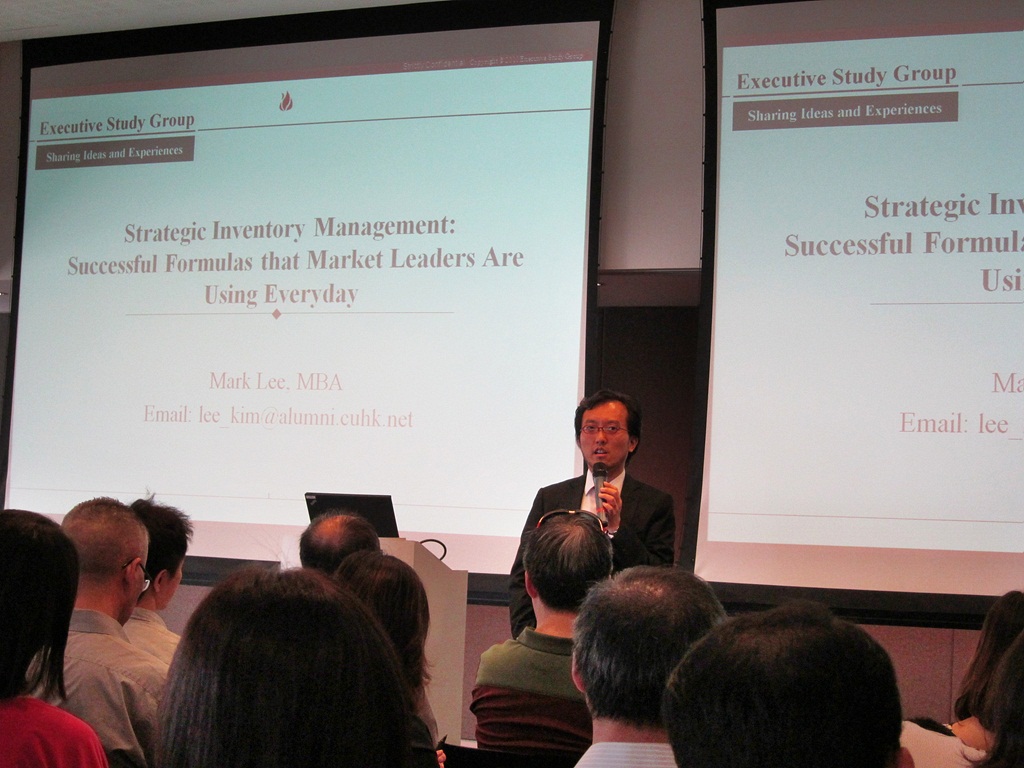
Recently, my article entitled "Quality as a Service: Testing and Certification Industry in Hong Kong" was issued in Competitive Advantage which was published by ASQ Service Quality Division in Aug 2011. I would like to post the article for sharing to all quality professionals.

When we are talking about Quality, many people only focus on product quality. It narrows the definition of Quality just for manufacturing related or product related. In the Information Technology (IT) industry, the term “Software as a Service” (SaaS) was very famous that could be referred to as “on-demand software”. It is a software delivery model in which software and its associated information are hosted centrally, so-called cloud computing (Recently, Apple’s new service is called iCloud.). I believe that Quality is a kind of service. We always need to provide excellence service so that Quality is also on-demand by customers. Therefore, I propose the concept of “Quality as a Service”. How does the concept of goods quality convert to service quality from an objective measurement to more abstract and elusive service which is intangibility, heterogeneity and inseparability of production and consumption (Parasuraman, Zeithaml, and Berry 1985)? It definitely requires to educate the public that Quality as a Service (QaaS).
Same as IT software in cloud computing, products quality assurance is centralized by different quality service providers such as internal quality assurance and control activities, internal and external quality consultancy, external testing laboratories, inspection bodies and certification bodies. It is similar to cloud computing. I call it Quality Cloud Servicing (QCloud). QCloud is a model of QaaS, indicating that Testing, Inspection and Certification service providers as centralized software database, provides quality service to different types of industry.
The Testing and Certification (T&C) Industry was identified by the Task Force on Economic Challenges (TFEC) as one of six economic areas which are high growth potential industries in Hong Kong, on 22 June 2009. From 2008 to 2009, T&C industry’s economic growth was about 13%. It was obvious in the mature economy of Hong Kong. Thus, Hong Kong Special Administrative Region (HKSAR) government established Hong Kong Council for Testing and Certification (HKCTC) on 17 September 2009. The vision of HKCTC is to develop Hong Kong into a Testing and Certification Hub in the region by reinforcing the branding of “Tested in Hong Kong, Certified in Hong Kong.”
In that case, Census and Statistics Department (C&SD) of HKSAR conducted a survey for collecting information and views on the profile of the testing and certification service in Hong Kong from December 2009 to January 2010. It demonstrated that private laboratories dominate in testing by comparison with in-house laboratories in different industries and government organizations. Moreover, it indicated Testing Service had 66% of business receipts in 2008 (Table 1). The testing service was found mainly in the four mature trades including Textile (28%), Toys (25%), Medical Testing (20%) and Electrical Products (14%). After that, HKCTC submitted the Report with all findings to Chief Executive of HKSAR on 31 March 2011. The report finally recommended to enhance Hong Kong Accreditation System together with the Factors of Production including Manpower, Technology, Capital and Land. (Lai, 2011)

Table 1 Value Added of the Six Industries (Census and Statistics Department, HKSAR, 2011)
The government of HKSAR accepted the report and the suggestions, and took the following actions to enhance the development of T&C industry. For Accreditation System, the current mode of accreditation in Hong Kong should firstly be maintained. Then, manpower should be provided for establishing new accreditation service (e.g. ISO 22000 & ISO 27001). For doing this, universities, Vocational Training Council (VTC) and the industry would cooperate to organize seminars, workshops and career talks to enable students to have understanding of the T&C industry, and to encourage the development of their career in this aspect so as to ensure adequate manpower supply. Regarding Technology, collaboration between institutions within the existing technology infrastructures such as Hong Kong Science and Technology Parks, Hong Kong Productivity Council and five R&D centres in Hong Kong are supported in order to have a wider use of Innovation Technology Fund provided by Innovation & Technology Commission (ITC) of HKSAR. Furthermore, the Small Entrepreneur Research Assistance Programme (SERAP) should be promoted extensively to build and preserve capital. Last but not least, Land is an important factor for developing the industry in Hong Kong. Industrial buildings could be revitalized for the T&C industry. It should also keep in view in Government’s plan on land supply for the industry such as Lok Ma Chau Loop development. The report further identified four trades which are considered to be good opportunities for new economic momentum, namely Chinese Medicine, Construction Material, Food and Jewellery (Lai, 2011).
Based on the HKCTC report, one of recommendations related to Hong Kong Science and Technology Parks Corporation (HKSTPC) is to magnify the promotion of their facilities available for shared use. Technology Support Centre of HKSTPC is focusing on this recommendation at present. HKSTPC provide R&D testing service for start-up R&D companies to assist their growth.
According to the concept of Quality as a Service (QaaS), a preliminary study was performed on the testing service by HKSTPC. SERVQUAL’s’ five dimensions suggested by Parasuraman et al. (1988) was adopted and the dimensions are shown as follows:
· Tangibles: Physical facilities, equipment, and appearance of personnel
· Reliability: Ability to perform the promised service dependably and accurately
· Responsiveness: Willingness to help customers and provide prompt service
· Assurance: Knowledge and courtesy of employees and their ability to inspire trust and confidence
· Empathy: Caring, individualized attention the firm provides its customers
Questionnaires was sent out to all our existing users and finally 141 responses were confirmed valid. The survey pointed out that around 93% replied customers were satisfied with HKSTPC laboratory service. Hence, it found the most important dimension was Responsiveness and HKSTPC best laboratory service level was Assurance. (See Figure 1)

Figure 1 – Service Dimension Result on HKSTPC Laboratory Service Survey
QaaS is an important concern for Testing and Certification Industry. It not only ensures the Quality Service in T&C industry but also maintains the industry “Five High”. They are:
i) High credibility of the Industry
ii) High profit margin
iii) High value added per person engaged
iv) High education staff needed
v) High Potential Growth Industry
I expect that QCloud will further develop in Hong Kong, so as to support the international trades especially in China, successfully.
Reference:
Parasuraman, A., Valarie Zeithaml, and Leonard Berry (1985), “A Conceptual Model of Service Quality and Its Implications for Future Research” Journal of Marketing (Fall), pp.41-50.
Parasuraman, A., Valarie Zeithaml, and Leonard Berry (1988), “Servqual: A Multiple-Item Scale for Measuring Consumer Perceptions of Service Quality”, Journal of Retailing, Vol 64-1, pp.12-40.
Census and Statistics Department, HKSAR (2011) - Feature Article - The Situation of the Six Industries in Hong Kong in 2008 and 2009, Hong Kong Monthly Digest of Statistics February 2011
Lotto K.H. Lai (2011), Keynote speech entitled “Introduction to Testing and Certification Industry and Quality Movement in Hong Kong – HKSTP Supporting Case” in TQM Kaz-2011 Forum on 15-17 June 2011, Kazakhstan.