2013年7月12日星期五

Technical Visit to Nano & Advanced Materials Institute Ltd (NAMI)

The technical visit to Nano and Advance Materials Institute Ltd. (NAMI) in The Hong Kong University of Science & Technology (HKUST) was organized by Hong Kong Critical Components Manufacturers Association (HKCCMA) and supported by HKPC, HKETA and HKSQ.


Prof. Ka Ming Ng (CEO, NAMI) was the first speaker who introduced NAMI background to us. NAMI has established since 2006 and it was a not-for-profit company incorporated by ITC and hosted by HKUST. The role of NAMI is undertaken and provided funding for industry-oriented research in nanotechology and advanced materials, as well as, offer market-driven innovative solutions to local industries by transforming scientific advancements into marketable products.


Prof. Ng said NAMI worked as Technology Marketplace through the steps: What-to-make -> How-to-mark -> Material -> Process. NAMI's approach and strategy was as bridge for both investors and innovators through networking, expertise and funding. NAMI separated into five clusters included Sustainable Energy, Solid State Lighting and Display, Environmental Technologies, Construction/Building Materials, and Bio & Healthcare Products. At the end, Prof. Ng said NAMI planned to relocate their Headquarters from HKUST to Hong Kong Science Park.


The second speaker was Dr. Peter W. Lee (CTO, NAMI) and he introduced NAMI's five clusters technologies.


For PhotoVolitaic (PV) Technology , Thin Film CIGS manufacturing process development and Organic PV (OPV) materials were under development. Other technologies were briefed including Printable Conductor from Nanoparticle Ink, Printed Si NPs Thermistor Array, Printed Temperature Sensors, Printable Low Cost OLED Display, Doped Nano Lithium Titanate (LTO), LED Thermal Management, Multifunctional Environmental Friendly Paint, etc.


After the talk, we took a group photo.


Then we visited different laboratories in HKUST. The first place was Materials Characterization and Preparation Facility (MCPF).


X-ray diffraction spectrometer


Transmission Electron Microscopy (TEM)


Then we visited Integrated Nano science Lab.
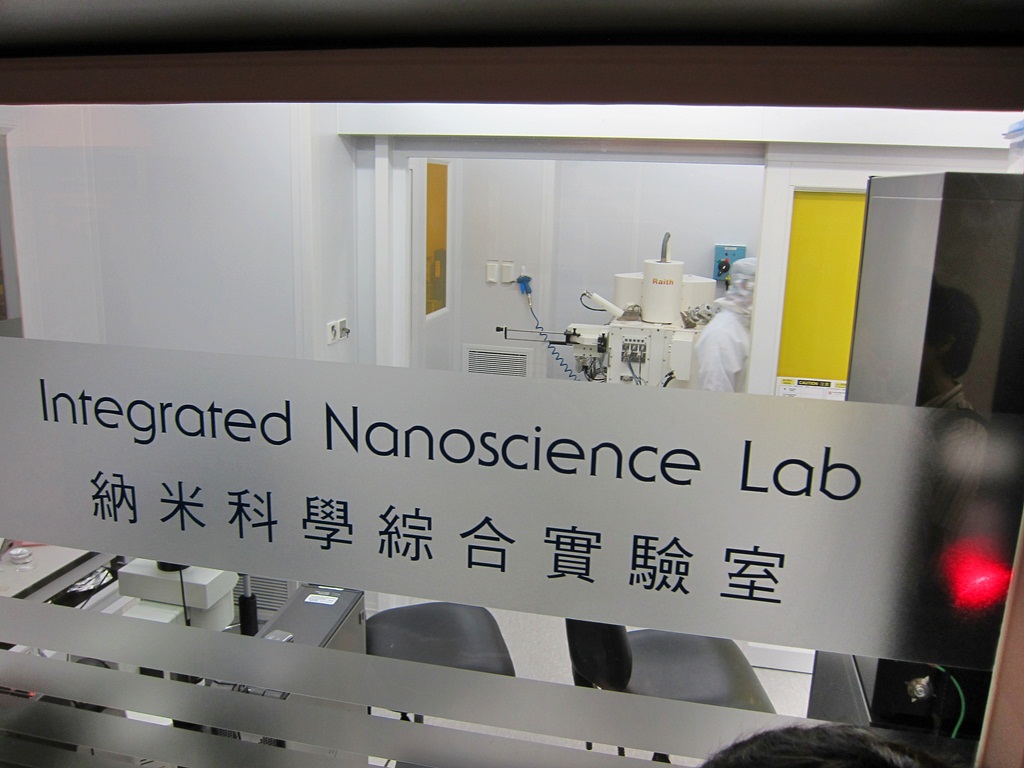

The clean room installed yellow lamp in which UV was removed. The area of photo was buffer area that no mask operation.


General area for R&D of wafer process


The lab representative explained the making of an Integrated Circuit from mask design and layout to wafer produced.


Reference:
HKCCMA - http://www.hkccma.org/
HKPC - http://www.hkpc.org/
HKETA - http://www.hketa.org.hk/
HKSQ - http://www.hksq.org/
NAMI - https://www.nami.org.hk/


2013年7月8日星期一

CQI Seminar "Quality is a Matter of Life or Death"

A seminar named "Quality is a Matter of Life or Death" was organized by Hong Kong Productivity Council (HKPC) and co-organized by Chartered Quality Institute (CQI) Hong Kong Branch, Hong Kong Q-Mark Council and Federation of Hong Kong Industries (FHKI) on 8 July 2013. Slips in quality management would not only impact on profit but would also damage brand image which may not be rebuilt even though a long time. The seminar aimed to update the industry with the latest development of quality management local and international markets.

Before the seminar, we took a photo with Mr. Simon Feary (Chief Executive, CQI).
(Left: Mr. Leslie Lee (Secretary and Honorary Chairman, CQI-HK), Mr. Simon Feary and I)


In the beginning, Dr. Lawrence Cheung (General Manager, Automotive & Electronic, HKPC) gave an opening remarks. Dr. Cheung said "Quality is continuous struggle." that indicating the seminar theme "Quality is a Matter of Life or Death".


Then Dr. Cheung presented a souvenir to Mr. Simon Feary and Mr. Bernie Ting (Chairman of Hong Kong Q-Mark Council, FHKI).


The first speaker was Mr. Bernie Ting (Chairman of HOng Kong Q-Mark Council, FHKI) and his presentation entitled "Q-Mark: Symbol of Quality for 35 years".


Mr. Ting started the Q-Mark story since 1978. The objectives of Q-Mark are to enhance product quality, service, and Green Mark standard among local enterprises; to encourage enterprises to focus on quality and environmental protection when establishing their own brands, and to establish Q-Mark into a well recognized and trusted quality mark. There were three Q-Mark Schemes included Product, Service and Green Mark Certification.


Then Mr. Ting mentioned that there were 138 companies certified under the Q-Mark Schemes where 58 under Product, 62 under Service and 18 under Green Mark Certification. After that Mr. Ting briefed some famous local brands whose certified under different mark scheme below.
Q-Mark Certified Products: 獅球嘜 Healthy-oil, Maxim's, LEE KUM KEE, 斧頭牌 AXE, etc.
Q-Mark Certified Services: 3D-GOLD, Amway, 大快活 Fairwood, MTR, etc.
Green Mark Certified Companies: LEO Paper Group, Sino Property Services, KMB, etc.

After that Mr. Ting shared some turning points such as Food Scandal and Brand Development among local manufacturers. After conducted survey, it was found that Q-Mark could enhance quality and brand which recognized by consumers. Lastly, Mr. Ting quoted Dr. Deming statement as conclusion that only a commitment to a process of continual improvement truly rewards.


Mr. Simon Feary (Chief Executive, CQI) was the second speaker and his topic named "Why Quality is Important - a matter of Life and Death". Mr. Feary briefed the history of Chartered Quality Institute (CQI) which was founded in 1919 and awarded Royal Charter in 2006.

Firstly, Mr. Feary asked us what do Quality People do? There were many quality's vocabulary but Simon selected three of them represented the role of the Quality Professional. They were Governance, Assurance and Improvement. He said our businesses and projects could be ensured because of having appropriate Governance, adopting effective process and product Assurance to identify and mitigate business & project risks, as well as, embedding a culture of continuous Improvement. Moreover, quality professional role included to protect your brand, to improve your processes and to reduce waste.


Then Mr. Feary explained the consequences of many cases when quality had ignored. For example, Sanlu Mike Power caused 6 babies deaths and financial loss upto RMB20bn. The company was no longer exist. Another example was Apple Map. Their reputation compromised and financial loss significant (US$34bn) and loss of market share.


At the end, Mr. Feary discussed the quality contribution in UK Economy and it showed about 6% of total GDP using the report from Centre for Economics & Business Research. In addition, Mr. Feary gave use key messages that "Quality failures can literally mean life & death" and "CQI working to reposition Quality".


Q&A
I asked how to calculate the economic contribution of quality to get 9% of GDP in UK. On the other hand, the testing and certification industry contributed only 0.3% of GDP in HK. Simon said the full report with details could be download in CQI website (see reference).


Reference:
HKPC - http://www.hkpc.org/
CQI-HK - http://www.thecqi.org.hk/
CQI-UK - http://www.thecqi.org/
The economic contribution of quality - http://www.thecqi.org/Knowledge-Hub/Research-and-reports/The-economic-contribution-of-quality/
FHKI - http://www.industryhk.org/
Hong Kong Q-Mark Council - http://www.industryhk.org/english/fs/fs_qmark/fs_qmark_prod.php
CQI Blog "The CQI in Hong Kong" - http://blog.thecqi.org/index.php/2013/08/22/the-cqi-in-hong-kong/


2013年7月7日星期日

HKSQ Career Talk on Testing and Certification Industry

HKSQ received an invitation by “Youth Employment Start” (Y.E.S.) to give a career talk on testing and certification industry. This talk was held in Y.E.S.(Kwai Fong) on 6 July 2013. “Youth Employment Start” (Y.E.S.) is one of Youth Employment Resource Centres established by Government and it aims to provide one-stop employment and self-employment support service to young people aged between 15 and 29. YES found HKSQ through The Support and Consultation Centre for SMEs (SUCCESS) of the Trade and Industry Department (TID). HKSQ have supported the SME Mentorship Programme launched by SUCCESS Since 2000. The career talk was summarized below.

Before the talk, speakers and organizer took a group photo.
(Left: Mr. Cliff POON, Mr. Karson CHUI, Mandy Wong (Social Worker, HKYWCA), and Dr. Lotto Lai)


Then Mandy Wong presented a souvenir to Mr. Karson CHUI.


Mr. Karson CHUI (Chairman, HKSQ) was the first speaker and he introduced the mission and service of Hong Kong Society for Quality (HKSQ), as well as, the professional development path through HKSQ.


I (Former Chairman, HKSQ) was the second speaker and my talk aimed to share my experience, Testing, Inspection & Certification (TIC) industry characteristic, and care path in testing laboratories.


The typical Career Pathway in TIC Industry from HKQF was showed in the following diagram.


Mr. Chiff POON (Certification Manager, SGS) was the last speaker and gave a talk named “Prospect and Development for Practitioners in Certification Industry”.


Chiff explained some attributes should have to be auditors included Ethical, Open-minded, Diplomatic, Observant, Perceptive, Versatile, Tenacious, Decisive and Self-reliant. The whole certification service process was briefed in the follow diagram.


Q& A Session
Karson consolidated Quality Management, Testing and Certification to give the overview picture to participants.


HKSQ had 5 representatives to support this talk.
(Left: Chiff Poon, Karson Chui, Ben Tsang, Lotto Lai & Minda Chiang)


Reference:
HKSQ - www.hksq.org
Y.E.S. - http://www.e-start.gov.hk
SUCCESS SME Mentorship Programme - http://www.success.tid.gov.hk/english/con_ser/sme_men_pro/sme_men_pro.html
SUCCESS 2011/12 SME Mentorship Programme - http://qualityalchemist.blogspot.hk/2011/02/success-201112-sme-mentorship-programme.html
2008/2010 SME Mentorship Programme Celebration - http://qualityalchemist.blogspot.hk/2010/08/20082010-sme-mentorship-programme.html


Technical Seminar on GMP in Food & Pharmaceutical Manufacturing Industry

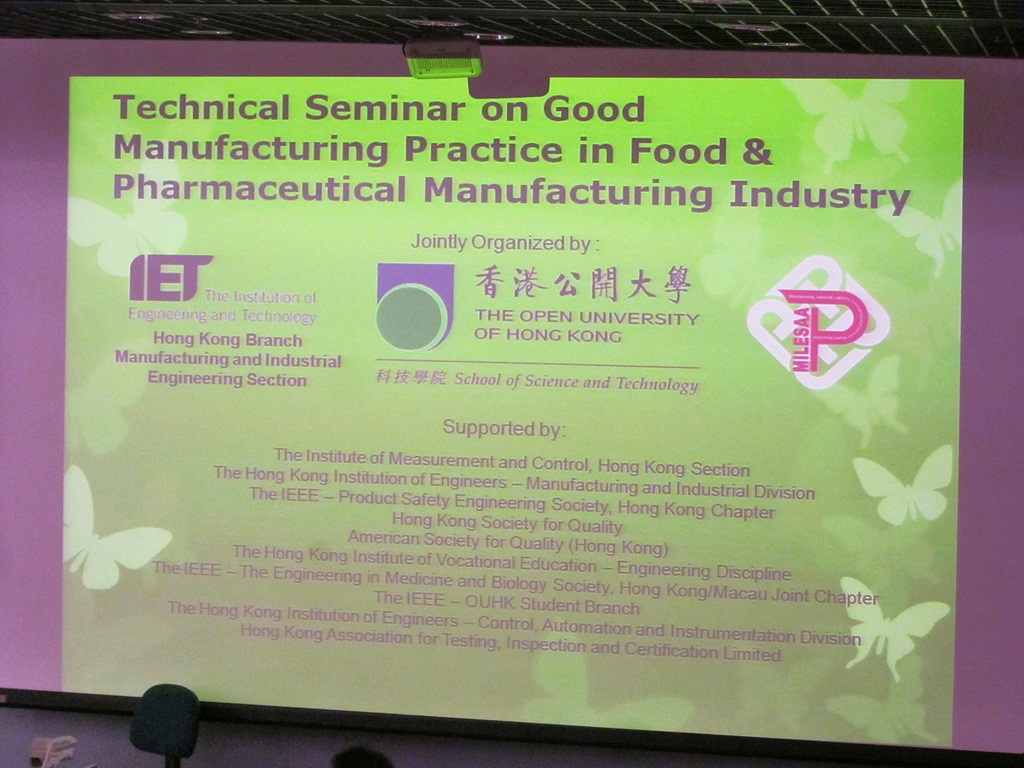
The Technical Seminar on Good Manufacturing Practice in Food and Pharmaceutical Manufacturing Industry was held on 6 July 2013. This seminar was jointly organized by The Open University of Hong Kong (OUHK), Manufacturing and Industrial Engineering Section (MIES), The IET Hong Kong, and MILES Alumni Association of The Hong Kong Polytechnic University. Hong Kong Society for Quality (HKSQ) and America Society for Quality (ASQ - HK) were supporting organizations. The seminar aims to share speakers' experience of GMP, Food Testing and Product Certification in Medical Device. The summary was shown below.


In the beginning, Dr. George HK LAU (Programme Leader & Associate Professor, Testing and Certification, School of Science & Technology, OUHK) gave a welcoming address. He said that OUHK had more than 6000 full time student and then he introduced OUHK new program and laboratories for T&C industry.


Then Ir. Dr. Angus CHEUNG (Chairman, The Institution of Engineering and Technology, Hong Kong Branch) presented an opening speech. Ir. Dr. Cheung pointed that Pharmaceutical and Food Safety were major concerned in Society.


After that IET and MILESAA presented souvenir to guest speakers. Ms. Minda Chiang received souvenirs. She was invited to be speaker and represented HKSQ.


Group photo of all speakers and representatives of organizers


The first speaker was Ms. Minda CHIANG (Hons Secretary, HKSQ) and her topic entitled "Good Manufacturing Practices (GMP) in Pharmaceutical Manufacturing". Firstly, she explain why GMP needed for drug industry and shared the history of drug accidents which caused the born of GMP.


Minda introduced what was GMP. It was part of QA to ensure that Medicinal products were consistently produced and controlled to the quality standard appropriate to their intended use and as required by the marketing authorization or product specification. She mentioned the values of GMP in Drug Industry included Safety, Identity, Strength, Efficacy/Potency, and Purity. The following diagram showed the Pharmaceutical Manufacturing Quality System.


After that Minda briefed the different requirements, included GLP, GCP and GMP, in different stages of drug development. For different products, their GMP would base on different requirements and showed below.
- Food (Processed Food): 21 CFR 110 / ISO 22000
- Cosmetic: ISO 22716
- Medical Device: 21 CFR 820 / ISO 13485
- Drug: PIC/S GMP / WHO GMP / Eudra GMP / US 21 CFR / HK GMP / SFDA GMP, etc.


Minda pointed out some foactors impacting the Pharmaceutical Quality System (Pharm QS) included emerging regulations and guidance, innovations that might enhance the Pharm QS, and changed in business environment and objectives. Finally, she concluded the concept of GMP aimed to diminish risk such as cross-contamination & mix-up. The quality and safety of medicines was only sustained by responsible people and continuous improvement.

The second speaker was Dr. Fred LEE (Assistant Professor, School of Science and Technology, OUHK) and his presentation named "Food Testing - Challenges and New Technologies". Dr. Lee reviewed GMP, Food Safety and Testing. Then he introduced modern testing technologies for food.


Dr. Lee briefed different Food Testing included Composition Analysis (e.g. Total fat), Contaminants (e.g. Pesticides), Natural Toxins (e.g. Marine Toxin), Additives (e.g. Sweeteners), Food Contact Materials (e.g. Leachable Metals), Food Authentication (e.g. Species ID by DNA method), Microbiological Test (e.g. Food Borne Pathogens) and Genetically Modified (GM) Food.  The following diagram summarized recently key food safety incidents.


Dr. Lee said the food testing technology was expected to be rapid, high-throughput, automation, ease of use, high sensitive & specificity, and competitive cost. Then he introduced three kind of modern technologies such as Mass Spectrometric (MS)-based, Serological-based and Molecular-based technologies. The biosensor used Transgenic Medaka for biological testing. (Details see previous seminar at http://qualityalchemist.blogspot.hk/2013/04/technical-seminar-on-product-testing.html)


Finally, Dr. Lee concluded the challenges and limitations included validation, standard reference culture techniques, viable, training & expertise, cost, regulation approval, reference materials and harmonized standard methods.

Before the tea break, Ir. MK Lam (IET Membership Development Committee and Vice Chairman of MILESAA) gave membership drive presentation.


The last speaker was Mr. Raymond YUE (Certification Manager, Hong Kong Certification Centre Ltd.) and his presentation topic was "HK Safety Mark - Medical Devices).


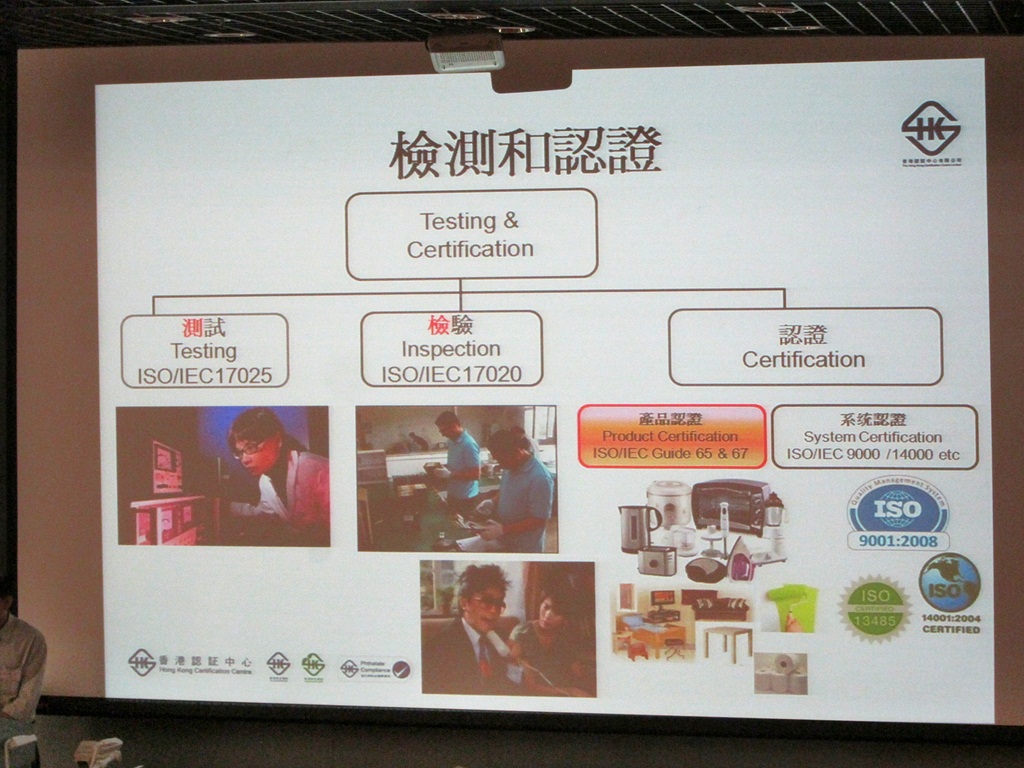
In the beginning, he introduced the requirement in Testing, Inspection and certification to us. Then he explained the requirement on ISO/IEC Guide 65 & 67. He mentioned the product certification (included medical device) had three characteristics:
1. Testing according to standards, local regulations etc.
2. Assessment of the production process and quality system
3. Surveillance - samples testing taken from the market or from supplier's stock or from a combination of manufacturing assessment or both.


The whole process of supply chain was shown as follows.


Since HKSQ had a career talk for young students in this afternoon, we left early before the seminar completed.

Reference:
OUHK - http://www.ouhk.edu.hk/
IET (HK) - http://www.theiet.org.hk/
MILES Alumni Association - http://www2.ise.polyu.edu.hk/milesaa/mission1.asp
HKSQ - http://www.hksq.org/index.asp


2013年6月30日星期日

World Internet Developer Summit

The World Internet Developer Summit was organized by Internet Society Hong Kong, Cyberport and Hong Kong Science & Technology Parks Corporation (HKSTPC) which held from 27 to 28 Jun 2013. The first day was held in Cyberport and the second day was held in HKSTPC. It aimed to connect with the greatest minds in the industry with the latest Internet development, news, various development platform techniques, hints and tips. I attended the second day morning session and would like to share the event below.


In the beginning, Prof. Joseph Ng (Vice-Chairman, Internet Society Hong Kong) gave a welcome remarks. He expected industry continued to keep technical speed and Internet development in Hong Kong.


Hon. Charles Mok (Legislative Councilor (IT)) was our guest and gave an opening remarks. He suggested to enhance the higher education on IT and to have more talents in IT field whose contributed in Hong Kong.


Mr. Anthony Tan (CEO, HKSTPC) gave an introduction of Science Park and explained how Science Park infrastructure and software support on the growth of IT industry.


Dr. David Chung (CTO, Hong Kong Cyberport Management Co., Ltd.) also introduce Cyberport programmes which assisted IT start-up companies.


Group photo of organizers and speakers


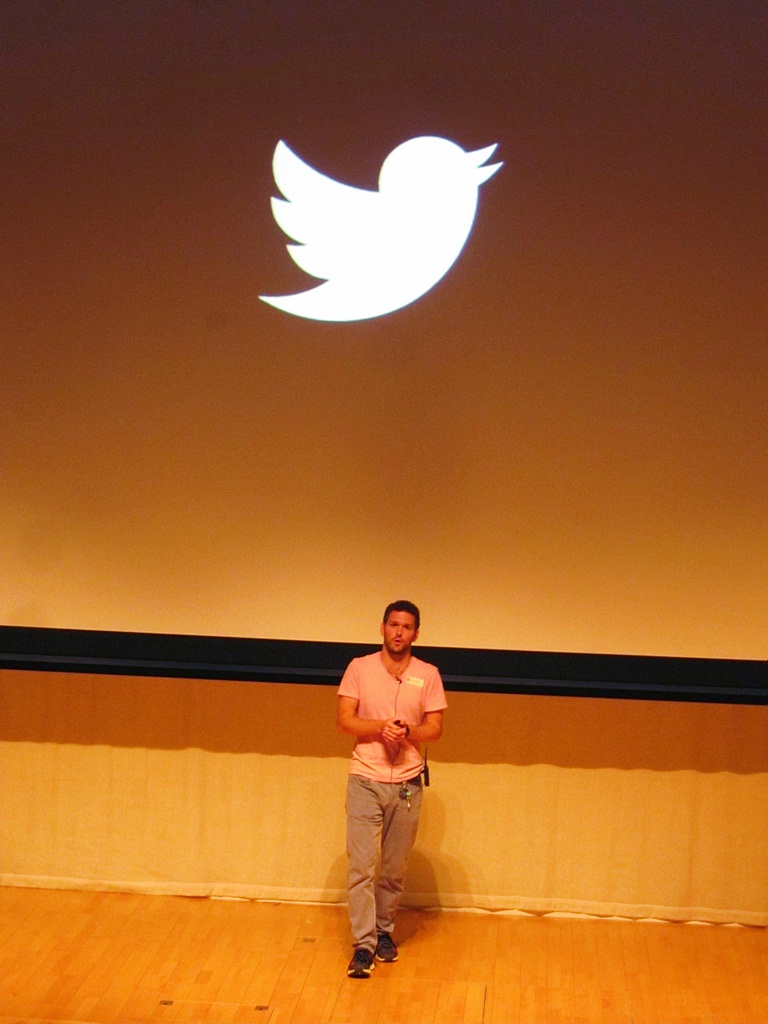
The first keynote speaker was Mr. Britt Selvitelle (Early Engineer at Twitter (Founding Team); Volunteer Engineer at Obama for America) and his topic named "Comparing and Contrasting Scaling Twitter and The Obama Campaign".


Britt briefed "The Love and Science behind the Growth of Twitter". He mentioned two words "Dopamine", "Norepinephrine" and "oxytocin" to explain how chemical affect human behavior. Then he was talking about Twitter which implied relationship.
After that he asked three questions below.
1. Should this exist in the world?
2. Are these people who can bring it into the world?
3. Are these the people I want to bring it into the world with?


The social reality of a group deals with their opinions and beliefs. Britte then quoted Peter Gollwitzer that "Change happens when people don't think about it." After that Britte introduced their team for Obama Campaign in Canada. He mentioned the different strategies as follow:
Before => GE 3rd Party Vendors
Twitter => Rails & Platform
Obama => Built Platform vs 3rd Party Vendors

Moreover, Britte emphasized to build out an Internal Tools Team. They also need to due with too much data problem. At the end, Britte quoted "Steven Pressfield statement as conclusion that "A child has no trouble believing the unbelievable, nor does the genius or the madman. It's only you and I, with our big brains and our tiny hearts, who doubt and overthink and hesitate."


The second speaker was Mr. Matt Valentine (Enterprise Solution Director, Microsoft Hong Kong) and his presentation entitled "Windows Azure and the cloud computing opportunity for developers".


Matt briefed the transformation of ICT included Cloud Computing, Big Data and Application Development. He also mentioned the digital accelerators of change. For processing power, it doubles every 18 months. For Bandwidth, it is doubling faster than processing power. And Digital data storage is doubling every 12 months.

After that he pointed out characteristics of Big Data included Massive data volumes, New data sources, Real-time and fast moving data, etc. After that he introduced Windows Azure which is a cloud computing platform and infrastructure, created by Microsoft, for building, deploying and managing applications and services through a global network of Microsoft-managed datacenters.


Matt said it should be focused on apps, not infrastructure. Windows Azure is an open source. Matt had demonstrated the application on-site and showed the data analysis in Hong Kong as an example.


Afternoon sessions were concurrent workshops.

Reference:
Internet Society Hong Kong - http://www.isoc.hk/
Cyberport - http://www.cyberport.hk/en
HKSTPC - http://www.hkstp.org/zh-HK/Homepage.aspx

2013年6月29日星期六

ASQ InfVoices - Quality Questions and Challenges

ASQ Influential Voice's June Topic was "Quality Questions and Challenges". Paul Borawski (CEO, ASQ) asked us two questions:

1. What is the most important challenge the quality community faces in ensuring that the value of quality is fully realized for the benefit of society?
2. What question does the quality community most need answered in order to advance the state of quality practice in the world?

I try to answer the first question using China community quality problem as example. The notorious case is "Melamine" in milk (Quality Crisis in Milk Industry). According to Freeman comments on China food problem, he mentioned four key failures.
1. Defect in quality awareness in government officers and leaders of industries.
2. Defect in quality structure including QC, QA and QM
3. Defect in management system to control the value chain
4. Defect in surveillance system of government bodies
All these defects are related to human being. Therefore, Human Factor is the most significant and it should be the most important challenge in the quality community. How can we solve food quality and safety problem? I believe it needs to implant the integrity concept in everyone through education and establishing social quality culture environment.

For the second question, I believe the quality professional should ask how to establish the "TRUST" from customer. Quality is the fundamental of obtaining customer's trust. However, many leaders of industries consider profit more important than quality. They will sacrifice quality for higher profit. In Jerry article stated "The Innovation Invitation" (11 Jun 2013). I think it is no need to sacrifice quality but using innovation to increase the profit. Jerry described "making things better" (quality) versus "making better things" (innovation). I would like to restructure the sentence to integrated Quality and Innovation, as well as, Hong Kong Science Park slogan "Making things happen" as conclusion below.

"Making Better Things Happen and Better"

Reference:
2010年05月- 質與量的戰爭:透視“中國品質”的的真相與未來(作者:楊鋼著)
(Freeman Young Gang (2010) "The war of Quality:Penetrate the true and future of China Quality" In Chinese)


LinkWithin

Related Posts with Thumbnails