2008年5月7日星期三

Biotech Lab General Requirement

The following information summarizes two types of laboratories requirements. The first one is a laboratory for microbiology test and the second one is for molecular biology test.

For Microbiology Laboratory, the facilities need to consider Biosafety Levels. WHO identified Risk Groups into 1, 2, 3 and 4. The table 1 is a classification of infective microorganisms by risk group.

Table 2 is relation of risk groups to biosafety levels, practices and equipment
Table 3 is summary of biosafety level requirements.

Code of practice
1. The international biohazard warning symbol and sign (Figure 1) must be displayed on the doors of the rooms where microorganisms of Risk Group 2 or higher risk groups are handled.
2. Only authorized persons should be allowed to enter the laboratory working areas.
3. Laboratory doors should be kept closed.
4. Children should not be authorized or allowed to enter laboratory working areas.
5. Access to animal houses should be specially authorized.
6. No animals should be admitted other than those involved in the work of the laboratory.

Fig 1. Biohazard warning sign for laboratory doors

Laboratory design and facilities for BSL 1 & 2.

1. Formation of aerosols
2. Work with large volumes and/or high concentrations of microorganisms
3. Overcrowding and too much equipment
4. Infestation with rodents and arthropods
5. Unauthorized entrance
6. Workflow: use of specific samples and reagents.
Examples of laboratory designs for Biosafety Levels 1 and 2 are shown in Figures 2 and 3, respectively.

Fig. 2 A typical Biosafety Level 1 laboratory
Fig. 3 A typical Biosafety Level 2 laboratory


The containment laboratory – Biosafety Level 3 is designed and provided for work
with Risk Group 3 microorganisms and with large volumes or high concentrations of
Risk Group 2 microorganisms that pose an increased risk of aerosol spread.

Fig. 4 A typical Biosafety Level 3 laboratory

The maximum containment laboratory – Biosafety Level 4 is designed for work withRisk Group 4 microorganisms. (It is not allowed in Hong Kong.)


For Molecular Biology Laboratory, the requirement to set up a PCR Laboratory is considered.

Development of the polymerase chain reaction (PCR) as a basic component of the molecular biology laboratory. The PCR laboratory typically is involved with activities that include sample preparation, PCR reaction assembly, PCR execution, and post-PCR analysis. Contamination prevention approaches are used in the PCR laboratory.

Fig.5 Outline of sample processing and analysis in a PCR laboratory.


Fig. 6 Organization of a PCR laboratory with separate pre- and post-PCR rooms.
Environmental Considerations

Air handling:
In the pre-PCR laboratory, there should be a slight positive pressure compared to the air in the connecting hallway. The post-PCR laboratory, in contrast, should be at slightly reduced pressure to pull air in from the outside and thereby prevent escape of amplicons from the completed PCR samples being analyzed inside the lab
UV irradiation:
It uses UV to sterilize the entire pre-PCR laboratory.
Protective clothing:
To further prevent PCR amplicons from leaving the post-PCR lab, each investigator should have a dedicated post-PCR lab coat. Additionally, each investigator should have a general molecular biology lab coat and a separate coat for pre-PCR.
Adhesive paper at lab entrances:
This approach effectively prevents trace amounts of dust and debris from entering the laboratory.

Reference:
1. Laboratory biosafety manual (Third edition) 2004: By World Health Organization
2. Setting Up a PCR Laboratory: By Theodore E. Mifflin (Department of Pathology, University of Virginia, Charlottesville, Virginia 22908)

2008年4月30日星期三

Jadeite Jade Classification (硬玉翡翠分類)

A seminar about Jadeite Jade classification was held on 29 April 2008 in HKPC which organized by HKIE-Material Division. The speaker (Ms. Bonita Kwok) introduced that JADE (玉) is divided into Fei Cui (翡翠) and Nephrite (軟玉). The different characteristic is show into the following table.


There are 3 common “Jades”. They are Fei Cui (翡翠), Nephrite (軟玉) and Serpentine (蛇紋石).


Use FTIR to analysis Jade composition


In late 2006, The Gemmological Association of Hong Kong released HKSM/JJT-2006 titled ‘Standard methods for testing Fei Cui (jadeite jade) for Hong Kong.
Contents of this standard begins with a precise definition of Fei Cui, its major physical properties, and a tabulation of the various types of Fei Cui (Types A, B, C, and B+C) that are available commercially.

Until now, there are five gemstone testing laboratories who achieved HOKLAS accreditation by HKAS. They are:
No.151 – Asian Gemmological Institute and Laboratory Limited
No.152 – China Gems Laboratory Limited
No.153 – Hong Kong Jade & Stone Laboratory Limited
No.156 – Yang Mulia Gems Limited – Hong Kong Gems Laboratory
No.165 – Jewellery Trade Laboratory Limited

2008年4月20日星期日

維基經濟學的思索 (Contemplation of Wikinomics)

在這個網路的新時代,通訊的簡便性所帶來的,是各式各樣的衝擊。大前研一說過「創造,往往是因為有破壞在先。」葛林斯潘的新書名為「The Age of Turbulence: Adventures in a New World」是他對全球經濟的未來30年的看法。他們有很多共通點如創新、變動和全球一體化。

觀看整個 Wikinomics 的觀念,就是「開放」 (Openness)、「合作」 (Peering)、「分享」 (Sharing) 和「全球化的觀念」 (Acting Globally)。如二十世紀的公司怎樣利用大形合作(Mass Collaboration)同開放原始碼(Open Source)技術而成功。Mass Collaboration 的經濟方式是創新和變動,現在已成為商業趨勢,由用家主導公司的發展方式,同以前由一間公司主導的發展模式,是完全相反的。 由用家通過各種免費的工具,即所謂群眾外包 (Crowdsourcing) 的技術,創造了一個平台給所有人都可以參與改善同解決問題。
Prosumer 一詞是最能描述以上的現象。它是由 producer 和 consumer 之縮合, 是指消費者直接參與產品的設計與製造過程。

在維基中說:「受到良好保護的企業,其研發部門常常已停止學習替代技術,而將資源投入改善產品、加入新功能或調整產品結構,逐漸不再有動力去發展或運用顛覆式科技。」及「所以企業要以開放的方式,盡可能廣大且快速地進行建設,最後就會取得最佳優勢找出真正經濟價值所在。」
在維基中還比喻說:「如果將昨天的職場,形容成一支緊密配合軍樂、行進完全一致的軍隊,則未來的職場將會更像爵士合奏,像是音樂家們根據一個音調、旋律和節拍,發揮創意即興創作。員工正在建立他們自己的自發組織、互相建立關係,並且形成跨功能團隊,以便能夠和全球即時的職場互動。工作流程以及實際工作空間的分權化,將是未來幾年的決定性潮流。確實,如果Linux、維基百科和其他合作式專案透露出什麼跡象,往往就是:讓工作者有生產力地自發組織,比起將他們擠進企業階級更容易且成本較低。」
這正正是和大前研一著的「專業 – 你的唯一生存之道」中引述管理大師杜拉克的比喻有異曲同工之效。他將經營者與員工的關係,比喻成交響樂團的指揮與團員。指揮熟知每位團員的實力,揮舞著指揮棒,引領大家做最高水準的演出;團員對指揮描繪的樂曲意境心領神會,合作無間的演奏出來。雙方都竭盡全力,為完成一場「讓聽眾(顧客)如癡如醉的演奏」而努力。他們都有強調自發的重要性 (專業是自我的追求)。

三國三分天下,鼎足而立是因為曹操挾天子以令諸侯佔天時,孫權據長江之險佔地利,劉備手下臥龍五虎佔人和。現在我們的新時代裹,網路提供了資訊革命的平台佔天時,香港是中西文化交匯處及鄰近中國大陸佔地利,所以勝負關鍵就在人和。而Wikinomics 的觀念就是集合所有網路中的人才,一同打天下。

以下是本人的一些想法:
「開放」:公司可把客戶名單開放,創造客戶交流平台。(雖然有很多公司不願意這樣做。)
「合作」:擴大合作範圍,把客戶的員工成為我們虛擬的顧員。
「分享」:技術知識分享,打造商業品牌,吸引更多客戶。(如Creative Commons創作共用/知識共享)
和「全球化的觀念」:建造服務網路平台,全球客戶想用就用。
真正的資訊革命有能力顛覆一切社會、經濟規則來改變世界,我們正面對它的來臨。

最後我想起一套很有創意的電影「The Matrix」中,Morpheus的一句話作總結。
Open your mind!

2008年4月13日星期日

大前的專業 (Ohmae's The Professionalism)

最近被一本書吸引著, 這就是大前研一著的「專業 – 你的唯一生存之道」. 以下是閱讀後的摘要給大家參考.
什麼是專業? 一般人認為是需要有高深專門知識的職業. 其實專業也可代表個人的信念, 它基於個人的知識,經驗和價值. 在大前研一的定義中, 一般人認為的只是專家 (specialist) 而不是專業 (professional). 專家做的是已經知道規則; 專業則在荒野中找出路, 在沒有路的世界中觀察和判斷, 然後帶領組織步向坦途. 他說專業的人永遠會考慮到顧客, 對顧客的承諾或誓言, 是專業有別於專家或通才 (generalist) 的重點.

以下定義簡稱為”大前的專業”:
大前研一 (Ohmae Kenichi) 認為的專業, 是要能控制感情, 以理性行動. 如果能擁有比以往更高超的專業知識, 技能和道德觀念; 堅持顧客第一的信念; 好奇心和向上心永不匱乏, 加上嚴格的紀律, 這樣的就可說是專業.
他還提出四頂必備的能力: 一) 先見力; 二) 構思力; 三) 議論力 和 四) 矛盾適應力.

金句摘要:
. 真正的專業就是要求自己登峰造極. 商界所謂的專業人才, 對於本身技能的磨練, 都抱著至死方休的決心, 並且樂在其中.
. 專業人才應該要對過去的常識存疑, 捨棄既有的知識, 也就是說要養成忘記過去所學(unlearn)的習慣. (如張三豐傳授太極拳劍比張無忌後, 張無忌道:「這我可全忘了,忘得乾乾淨淨的了。」)
. 追求無人可及的深度. 成功的必要條件包括「範圍小, 深度深, 速度快」.
. 一個專業人才, 一定要用邏輯. 將理論, 常識或個人經驗, 放在「邏輯」這個普遍的平台上, 就可以成為議論力的泉源.
. 提出不同意見的人有舉證的責任, 也就是有義務提出合理的反證及替代方案. (非常同意!!)
. 事業的成功或失敗是由願景決定的, 而願景的偉大或平凡, 則是由人決定的.

2008年3月16日星期日

Medical Devices and Limulus Amebocyte Lysate (LAL) Testing

The HKIE seminar about LAL testing presented by Ms. Laurie Fife on 13 March 2008 from 4:00pm to 6:00pm in Hong Kong Productivity Council. I would like to summarize and search more information about this topic as follows:

She demonstrates the testing kid to us during the seminar.


Finally, a positive result was obtained.

Introduction:
Pyrogen:
The pyrogen will cause the elevated body temperature (i.e. fever). Pyrogens are usually bacterial products and remains or decaying products of the bacterial cell walls. Even in minimum dose, these substances induce elevated body temperature when injected into humans and animals. Pyrogens are usually high-molecular-weight substances of polymerous nature, like lipopolysacharids. Pyrogens could be either microbial or non-microbial.

Endotoxin:
Endotoxins are high-molecular-weight complexes associated with the outer membrane of gram-negative bacteria (GNB). They are the most usual cause of the elevated body temperature, induced by contaminated drug products. Their pyrogenic activity is higher than that of other pyrogenic substances. It could be said that the absence of such bacterial endotoxins in a drug implies the absence of pyrogenic components in examined drug in general. Endotoxins are similar to lipopolysacharids, they are heat stable and can survive the sterilisation process. In their molecular structure, endotoxins contain lipid A which is responsible for the endotoxic activity of the endotoxins. The free form of lipid A, extracted from endotoxins by acid hydrolysis, has almost the same spectrum of biological activities as the endotoxin itself.

Lipopolysaccharide (LPS):
LPS is a major component of the outer membrane of Gram-negative bacteria, contributing greatly to the structural integrity of the bacteria, and protecting the membrane from certain kinds of chemical attack. LPS is an endotoxin, and induces a strong response from normal animal immune systems.


Fever is a rise in our body's normal temperature, which, on average, is 98.6 degrees Farenheit. Our blood and lymphatic systems produce white blood cells which are what fight off infection. As our white blood cells increase in number, like an army to fight the germs, they go faster and faster attacking the germs, this causes our bodies to heat up, thus causing the fever or rise in body temperature. The hypothalamus in the brain, which is the body's heat regulating mechanism is affected by the pyrogens, or the white blood cells that are produced to fight the infection.

Why Limulus Amebocyte Lysate (LAL) testing?
Rabbit Pyrogen Test
1920’s Seibert proved fevers from IV products were induced by heat-stable, filterable substances called “pyrogens” and then he chose the rabbit as the animal model. But Rabbits test may cause false positives. Moreover, it needs to inject three rabbits per test.

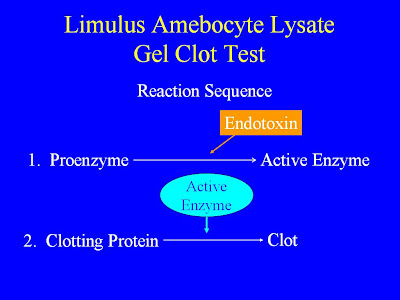
Limulus Amebocyte Lysate (LAL) testing is including:
• Gel Clot
• Endpoint Chromogenic
• Automated assays
– Turbidimetric
– Chromogenic
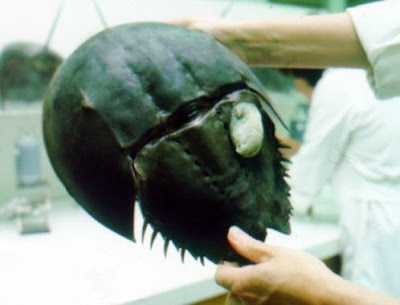
Limulus polyphemus—the American Horseshoe Crab was employed. The cardiac membrane is disinfected with a sterile alcohol wipe. A sterile needle is gently inserted and the blood begins to flow. Bleeding takes seconds and the needle is removed as the flow of blood slows. Clotting takes place at the point of needle insertion.
Host Defense Mechanism:
. Granules contain clotting factor / enzymes.
. The crab can survive having most of its blood clot.
. Gram-negative bacteria or endotoxin causes blood cells (amebocytes) to release proteins into the plasma (hemolymph) causing the blood to coagulate.
. Coagulation kills bacteria and neutralizes endotoxin.


LAL Chromogenic Test


LAL Turbidimetric Test


Manufacture of LAL
. Collect animals
. Extract blood
. Centrifuge blood
. Wash cell
. Lyse cell
. Extract proteins


Conclusion:
1977 FDA approved LAL test for release of medical devices
Most devices are very straightforward
- Water rinses
- No interference
- Endotoxin recovered form challenge
Treatments to Overcome Inhibition/Enhancement
• Dilution
• pH Adjustment
• Heating
• Surfactant/Dispersing Agent
• Cellulase or Glucan Blockers
• Divalent Cation addition
• Ultrafiltration

2008年3月13日星期四

Biological Waste Management

The public lecture entitled “Biological Waste Management – Anaerobic Digestion, Composting and Vermicomposting” presented by Professor Eliot Epstein on 11 March 2008 at 6:30am in Hong Kong Baptist University.

He introduces 3 types of biodegradable methodology for waste management and analysis the advantage and disadvantage in each method.

Anaerobic digestion is a process in which microorganisms break down biodegradable material in the absence of oxygen. The process is widely used to treat wastewater sludges and organic wastes because it provides volume and mass reduction of the input material.


Composting is the aerobic decomposition of biodegradable organic matter, producing compost. The decomposition is performed primarily by facultative and obligate aerobic bacteria, yeasts and fungi, helped in the cooler initial and ending phases by a number of larger organisms, such as ils, and other families representing ants, nematodes and oligochaete worms.
Vermicompost (also called worm compost, vermicast, worm castings, worm humus or worm manure) is the end-product of the breakdown of organic matter by some species of earthworm. Vermicompost is a nutrient-rich, natural fertilizer and soil conditioner. The process of producing vermicompost is called vermicomposting .

Conclusion:
He does not believe that any one technology should be used by HK to solve the solid waste problem. But he believe the potential solutions are:
i) initiating an aggressive recycling program;
ii) using composting to recycle food waste from markets;
iii) considering anaerobic digestion and waste to energy before considering incineration;
iv) No consider and waste money on vermiculture.

2008年3月10日星期一

Three Quality Gurus have long life

Recently, Juran has passed away at 103 years old. He is the longest life among quality gurus.
Eventhough it is no scientific evidence about life and studying of quality, the following 3 quality professionals are comparative long live.

Dr. W. Edwards Deming is known as the father of the Japanese post-war industrial revival and was regarded by many as the leading quality guru in the United States. He passed away on December 20, 1993 at the age of 93.

Philip B. Crosby, who championed the zero-defects concept and preached that “quality is free,” has 75, passed away on August 18, 2001.

Dr. Joseph M. Juran, noted author and "father" of modern day Quality Management, passed away on February 28, 2008, from natural causes. He was 103 years old, and was physically and mentally active until his death

2008年3月4日星期二

Learn Team Building through Samba

This paper discusses the team building through Samba dancing for departmental talent show in annual dinner. When we received the mission to perform a dancing show which represented our department, we have a very clear team goal and target.

Goal and Target:
It remains three week for us to practice the Samba. In the beginning, the practice schedule is planned to be practice two day per week in lunch hour. We have planned 4 pair for Samba and Drum player sole. Time is tight and participants are not enough.

Individual Resource:
One of our colleagues is familiar with Samba and she works as our dancing teacher. Another colleague who is familiar with music and drum player; and he prepares the background music. After that we need to recruit 7 colleagues as dancers. Initially, there are only 2 girls and 2 boys to join the practice but it is only half participants in our target. Under no circumstance, some colleagues are encouraged and forced to join.

Encourage Team Members to Develop Skills:
The first lesson, we have learned the basic step of Samba. At that time, every participant have practice the same posture and motion. We listen to the beat and rhythm. However, some people come late, no show or can’t achieve the progress. During the dancing pair matching, our teacher selected at least one of partner with good sense of rhythm that can help the whole performance. Our dancing teacher works as team leader to motivate every one when we achieve a certain level. Some team member joined us late (e.g. after 3 lesson). Team leader is coaching them individually and assigns one of the best team members to lead the others to practice. When there is only a week before annual dinner, all dancing team members request to practice more times spontaneously. The commitment is more obviously.

Communication and Involvement:
We have a communication platform to update all department members about our practice progress and encourage others to join us. We show the whole arrangement of dancing show to all staff in the department. The sequence of the show is 1) Samba by 4 dancing pairs; 2) Sole of Drum player & dancer and 3) all people to join the dance of “Macarena”. Two days before annual dinner, we have up to 30 colleagues to join the “Macarena” practice. It is very high team spirit at the time. Finally, we have a good show in annual dinner and all audience is appreciated.

Conclusion:
Team building is not only one super dancer in the show but it needs every team member involvement and whose understand the Samba steps, rhythm, concentration, matching and respect with partner. In here, drumming is a great way to break down barriers, create common environment and teach people the value of listening and learning together as a team. Leader needs encouraging individuals to work with others towards a common goal. During this Samba dancing, we learn the following key points about effectiveness of team:
1) Clear objectives: Talent Show in annual dinner
2) All team members have opportunities to contribute to objective setting
3) Support for each other during practice
4) Regular review of team performance for learning rather than blaming
5) Good communication
6) Sufficient time for planning
7) There is a broad mix of skills (dancing & drumming) and personal attributes.
After the show, every team members are satisfied their performance and rewarded by learning Samba.


2008年3月2日星期日

Roberto Saco, ASQ President - Elect, Visiting HK

Mr. Roberto Saco visited Hong Kong and he had exchanged ideas with the leadership of HKSQ at 8:00 AM for a breakfast meeting in Peninsula Hotel on 26th Feb 2008.

HKSQ participants: Dr. Albert Tsang, Dr. K.S. Chin, Dr. Aaron Tong and Ir. Lotto Lai.

We learned a lot about Roberto's views on ASQ's future directions and the current quality management practices in the US. ASQ's outreach programs and development of collaborative relationships with overseas organizations would enhance the ASQ brand and the Society's contribution to enabling achievement of performance excellence in organizations around the world.

2008年2月23日星期六

RFID Technology & Application

Radio Frequency Identification (RFID) is a kind of technology using radio waves to identify individual items without physical contact automatically. A typical RFID system contains 3 basic components: Reader, Antenna and Tag.

Barcode is the most common technology which employed for identification. But RFID is more advance in identification down to individual items. The following is comparison of RFID and Barcode.


The information shared is come form the following seminar which organised by Hong Kong Society for Quality (HKSQ) on 23rd Feb 2008.


The history of RFID development:


Some application example are shown as follows:
In Hong Kong Jockey Club, RFID is used for tracing the position of horses during race.


Some manufacturers are using RFID to trace their product during production.

For asset management, the hi-tech equipment is traced in different production line and location.


Warehouse management is also popular to employ RFID.


Hong Kong Polytechnic University had obtained patients for RFID deployment.


The chairman of HKSQ (Dr. Albert Tsang) presents souvenir to the specker (Dr. S.K. Kwok).


Then, we visit the laboratory and observe some real products.


2008年2月1日星期五

Service Quality

Customer requirement and expectation is a dynamic function, implying that the status of product quality is accepted in a certain time but it does not mean it will be always accepted by customer in the future. So we need continual improvement of the product quality. When societies become wealth, people do not satisfy only on the product but also on the experience of service. Under this situation, the quality of service becomes more and more important. The most famous Service Quality model is a GAP model which was proposed by Parasuraman (1985). Another scholar (Liu, 2002) combined ISO9001 requirement into GAP model is shown as follows.

The various gaps visualized in the model are:
Gap 1: Difference between consumers' expectation and management's perceptions of those expectations, i.e. not knowing what consumers expect.
ISO 9001: 5.2 – Customer focus; 7.2 – Customer-related process

Gap 2: Difference between management's perceptions of consumer's expectations and service quality specifications, i.e. improper service-quality standards.
ISO 9001: 6 – Resource management; 7.1 – Planning of product realization; 7.3 – Design and development

Gap 3: Difference between service quality specifications and service actually delivered i.e. the service performance gap.
ISO 9001: 7.5 – Product and service provision; 8.2 – Monitoring and measurement

Gap 4: Difference between service delivery and the communications to consumers about service delivery, i.e. whether promises match delivery?
ISO 9001: 5.1 – Management commitment; 5.3 – Quality policy; 5.4 - Planning

Gap 5: Difference between consumer's expectation and perceived service. This gap depends on size and direction of the four gaps associated with the delivery of service quality on the marketer's side.
ISO 9001: 8.2.1 – Customer satisfaction; 8.2.4 – Monitoring and measurement of product; 8.5 - Improvement

One of quality principle is to exceed customer expectation. It is very difficult to achieve. However, a book written by Christian entitled “If God is your customer” (in Chinese) shows how you exceed customer expectation. Another book written by MaBelle people entitled “MaBelle is Different” (in Chinese) indicates how MaBelle staff serves their customer. In MaBelle case, they use IT to create value-added services, as well as, their enthusiastic for assisting their customer. It demonstrates that good service quality comes from the heart of service provider (Customer Care!).


Reference:
Parasuraman, A., Zeithaml, V.A. and Berry, L.L. (1985), “A conceptual model of service quality and its implications for future research”, Journal of Marketing, Vol.49, No.3, pp. 41-50.

廖仁傑 (2002) “結合ISO 9001:2000 與 PZB Gap Model 之「顧客滿意」改善方式”, 38th Annual Conference of CSQ & 8th NQMS

MaBelle 人 (2007) “MaBelle is Different”, 樂文出版社有限公司.

LinkWithin

Related Posts with Thumbnails